

If you've ever owned a classic car, you know the struggle. That perfect 1967 Mustang sitting in your garage needs one simple part—a trim piece, a dashboard knob, or a vent cover—and it simply doesn't exist anymore. The manufacturer stopped making it decades ago. The salvage yards are picked clean. And when you finally find one on eBay, the seller wants $500 for a piece of plastic worth $20.
This is where 3D printing technology is changing everything for classic car enthusiasts. What was once considered "unobtainium"—those rare, discontinued parts that made restorations impossible or prohibitively expensive—can now be recreated with precision in your garage or through specialized services.
In this comprehensive guide, we'll explore exactly how 3D printing is revolutionizing classic car restoration, which parts work best for 3D printing, the materials you need, real-world success stories, and how you can start creating your own replacement parts today. Whether you're working on a numbers-matching concours restoration or a daily-driver restomod, 3D printing offers solutions that simply weren't available even five years ago.
Why Classic Car Parts Are Perfect for 3D Printing
Classic cars—typically defined as vehicles 20-45 years old or older—present a unique challenge: they're old enough that parts are discontinued, but beloved enough that owners desperately want to keep them on the road. This creates the perfect use case for 3D printing technology.
The classic car market has exploded in recent years, with values reaching all-time highs for everything from American muscle cars to European sports cars to Japanese imports from the 1980s and 1990s. Yet as these vehicles age, the parts availability crisis only worsens. Every year, more original stock gets consumed, warehouses close, and tooling gets scrapped.
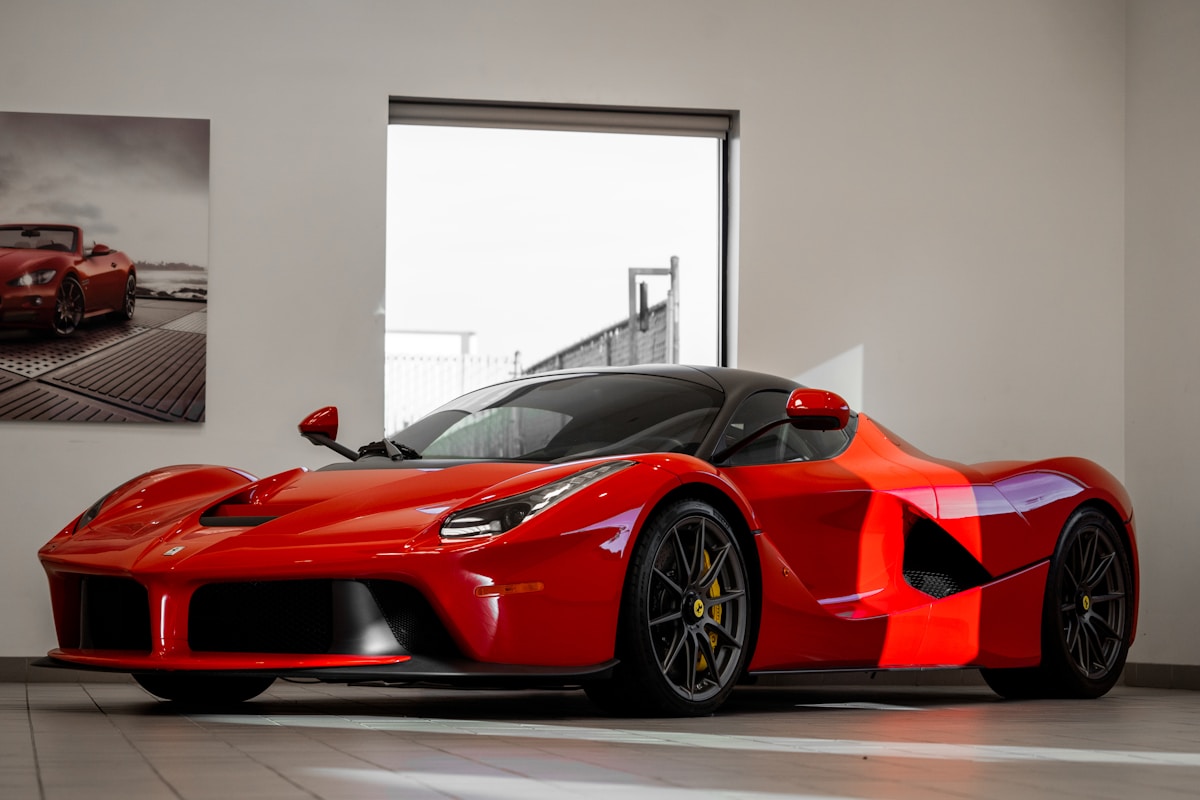
The "Unobtainium" Problem
Every classic car enthusiast knows this term. It refers to parts that have become nearly impossible to find:
- Discontinued OEM parts – Manufacturers stopped producing them 20-50 years ago
- Low production vehicles – Limited edition models with parts made in small quantities
- Unique trim pieces – Model-specific interior and exterior components
- Obsolete technology – Parts using manufacturing methods no longer common
- Regional variations – Export models with country-specific components
- Dealer-installed accessories – Period options that were never catalogued
- Fragile materials – Parts made from materials that degrade over time
For decades, restorers had three options: scour swap meets and salvage yards, pay collector prices, or fabricate parts by hand. 3D printing introduces a fourth option that's often faster, cheaper, and more repeatable. And unlike hand fabrication, once you have a working digital file, you can produce identical parts indefinitely.

The Economics of Rare Part Production
Traditional manufacturing methods require significant setup costs. Injection molding, for example, requires expensive tooling that only makes economic sense when producing thousands of units. For a part that might sell 50 units per year, no manufacturer will invest in tooling. This leaves classic car owners stranded.
3D printing flips this equation. There's no tooling cost—each part is produced directly from a digital file. Whether you need one part or one hundred, the per-unit economics remain favorable. This democratizes manufacturing in ways that directly benefit the classic car community.
💡 Did You Know?
A 2019 New York Times article highlighted how companies like HV3DWorks are using 3D printing to recreate parts for classic Porsches, Ferraris, and American muscle cars—parts that would otherwise cost thousands or simply don't exist anymore. Major manufacturers like Mercedes-Benz, BMW, and Porsche have all launched 3D printed parts programs for their classic vehicles.
What Classic Car Parts Can Be 3D Printed?
Not every part is suitable for 3D printing, but a surprisingly wide range of classic car components can be successfully recreated. Understanding which parts work best will help you plan your restoration project effectively and set realistic expectations.
Interior Components (Excellent for 3D Printing)
Interior parts are often the sweet spot for 3D printed classic car parts because they don't face extreme temperatures or structural loads. They're also often the parts that suffer most from age—decades of UV exposure, handling, and material degradation take their toll.
- Dashboard components – Instrument bezels, switch housings, vent surrounds, and speaker grilles
- Knobs and handles – Radio knobs, window cranks, HVAC controls, and seat adjustment levers
- Trim pieces – Door panel inserts, pillar covers, console components, and armrests
- Gauge clusters – Custom gauge surrounds, bezels, and lens retainers
- Storage solutions – Cup holders, phone mounts, and organizers adapted to classic interiors
- Switch plates – Custom legend plates for aftermarket switches that match period styling
- Ash trays and lighters – Replacement inserts and surrounds for these common failure points
- Glovebox components – Latches, hinges, and dividers
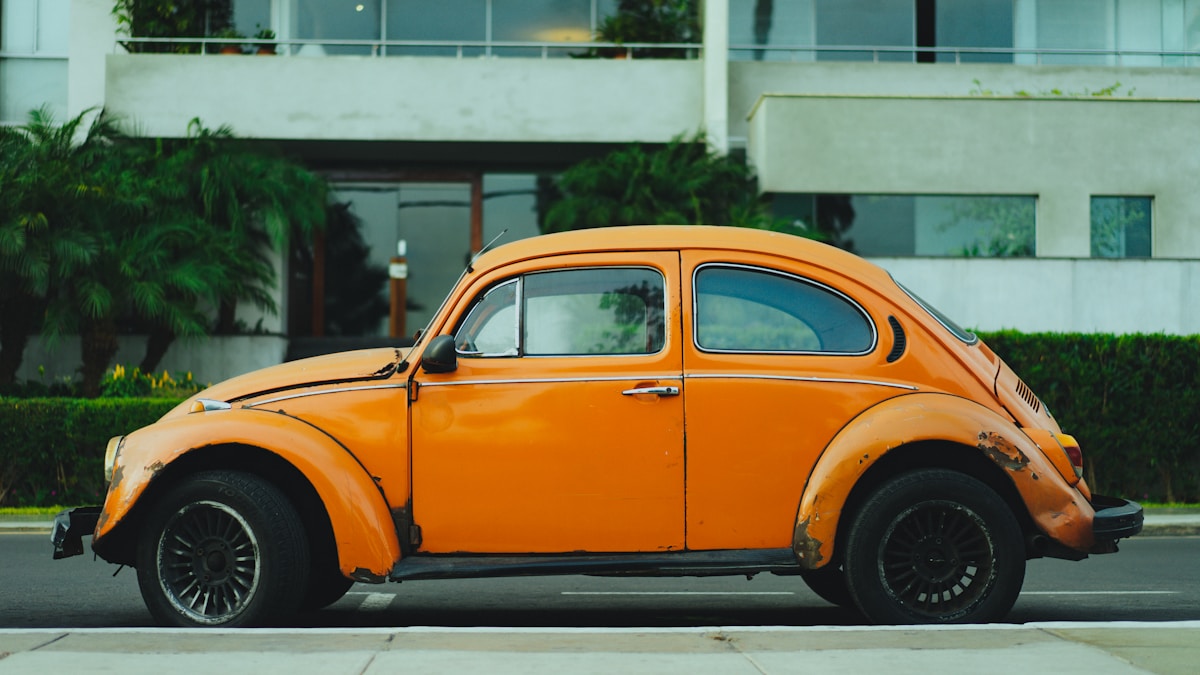
Exterior Trim (Good for 3D Printing)
Exterior parts require UV-resistant materials but can be successfully 3D printed with the right approach. ASA (Acrylonitrile Styrene Acrylate) has emerged as the go-to material for these applications due to its excellent weatherability.
- Badges and emblems – Recreate rare model badges, scripts, and manufacturer logos
- Grille components – Clips, mounting brackets, small grille sections, and mesh surrounds
- Light housings – Backup light surrounds, marker light bases, and reflector housings
- Mirror housings – Side mirror shells and mounting bases for obsolete designs
- Antenna mounts – Power antenna housings, trim rings, and manual antenna bases
- Body plugs – Hole covers, trim clips, weatherstrip retainers, and body seam covers
- Bumper components – End caps, filler panels, and trim inserts (non-structural)
- Hood and trunk components – Prop rod clips, trunk light housings, and emblem bases
Functional Parts (Requires Engineering Knowledge)
Some functional components can be 3D printed with the right materials and design considerations. These parts often require more careful material selection and may need professional engineering review.
- Fluid reservoirs – Windshield washer tanks, overflow bottles, and brake fluid caps
- Brackets and mounts – Non-structural supports, hangers, and mounting plates
- Clips and fasteners – Wiring clips, hose clamps, trim retainers, and cable guides
- Air ducting – HVAC ducts, distribution boxes, and fresh air intake components
- Cable guides – Throttle and shift cable routing components and bushings
- Vacuum components – Check valves housings, splitters, and reservoir tanks
- Electrical housings – Fuse box covers, relay holders, and connector housings
⚠️ Important Safety Note
Avoid 3D printing safety-critical parts like brake components, suspension parts, steering linkages, or anything in the engine bay that experiences extreme heat. These require proper engineering materials and often metal fabrication. Fuel system components should also be approached with extreme caution due to chemical compatibility requirements. When in doubt, consult a professional.
3D Printing Materials for Classic Car Parts
Choosing the right material is crucial for creating durable, functional parts that will last in your classic car. Different materials excel in different applications, and understanding their properties will help you make the right choice. The material science of 3D printing has advanced dramatically, giving classic car restorers options that simply didn't exist a few years ago.
| Material | Best Uses | Strengths | Limitations | Heat Resistance |
|---|---|---|---|---|
| ASA | Exterior parts, badges, grille components | Excellent UV resistance, weather-proof | Requires enclosed printer, fumes | ~95°C (203°F) |
| ABS | Interior parts, knobs, brackets | Strong, impact resistant, paintable | Warping issues, poor UV resistance | ~85°C (185°F) |
| PETG | Mechanical parts, fluid containers | Chemical resistant, easy to print | Lower heat tolerance, scratches easily | ~75°C (167°F) |
| Nylon (PA) | High-wear parts, gears, clips | Extremely durable, low friction | Absorbs moisture, difficult to print | ~110°C (230°F) |
| TPU | Seals, gaskets, weatherstripping | Flexible, rubber-like, vibration dampening | Stringing, slower print speeds | ~80°C (176°F) |
| PEEK | Engine bay, high-heat applications | Industrial-grade, chemical resistant | Expensive, requires special equipment | ~250°C (482°F) |
| Carbon Fiber Nylon | Structural brackets, high-stress parts | Very stiff, excellent strength-to-weight | Abrasive on nozzles, expensive | ~120°C (248°F) |
For most classic car restoration projects, ABS (Acrylonitrile Butadiene Styrene) and ASA are the workhorses. ABS is the same material used in original automotive parts from the 1960s-1990s, making it ideal for period-correct restorations. When properly printed and finished, ABS parts are virtually indistinguishable from originals.

Material Selection Guide by Location
One of the most common mistakes new makers make is using the wrong material for the application. Temperature, UV exposure, and chemical contact all matter. Use this guide to select the right material for your specific application.
| Part Location | Recommended Material | Why This Choice |
|---|---|---|
| Dashboard (away from sun) | ABS or PETG | Protected from UV, moderate temps |
| Dashboard (sun exposure) | ASA | UV stable, won't yellow or crack |
| Exterior trim | ASA | Weather and UV resistant |
| Under hood (cool area) | Nylon or PETG | Chemical resistant, durable |
| Trunk/boot area | ABS or PETG | Protected environment, cost effective |
| Weatherseals/gaskets | TPU (85A-95A shore) | Flexible, sealing properties |
| Clips and fasteners | Nylon PA12 | Flexibility without breaking, fatigue resistant |
| Structural brackets | Carbon Fiber Nylon | Maximum stiffness and strength |
✅ Pro Tip: Material Testing
Before committing to a full print, print a small test piece and leave it in your car for a week during summer. Check for warping, softening, or color changes. This real-world test is worth more than any spec sheet. Cars parked in the sun can reach interior temperatures of 150°F (65°C) or higher—well above the glass transition temperature of PLA and some other materials.
Understanding Material Properties
Several key properties determine how well a material will perform in automotive applications:
Glass Transition Temperature (Tg): This is the temperature at which a plastic begins to soften. For car parts, especially interior parts exposed to sun, you need materials with a Tg well above expected temperatures. PLA's Tg of ~55°C makes it unsuitable for most automotive applications.
UV Stability: Ultraviolet radiation breaks down most plastics over time, causing yellowing, brittleness, and eventual failure. ASA is specifically formulated for UV resistance, while ABS will degrade without protective coatings.
Chemical Resistance: Under-hood parts may contact fuels, oils, coolant, and cleaning products. PETG offers good chemical resistance, while some materials will dissolve or swell when exposed to certain chemicals.
Impact Strength: How well does the material absorb energy without cracking? ABS and Nylon excel here, while materials like PLA can be brittle.
The Complete Process: From Broken Part to Perfect Replica
Creating 3D printed parts for your classic car involves several steps. Whether you're doing this yourself or working with a service provider, understanding the process helps ensure success. Each step builds on the previous one, and shortcuts often lead to parts that don't fit or fail prematurely.
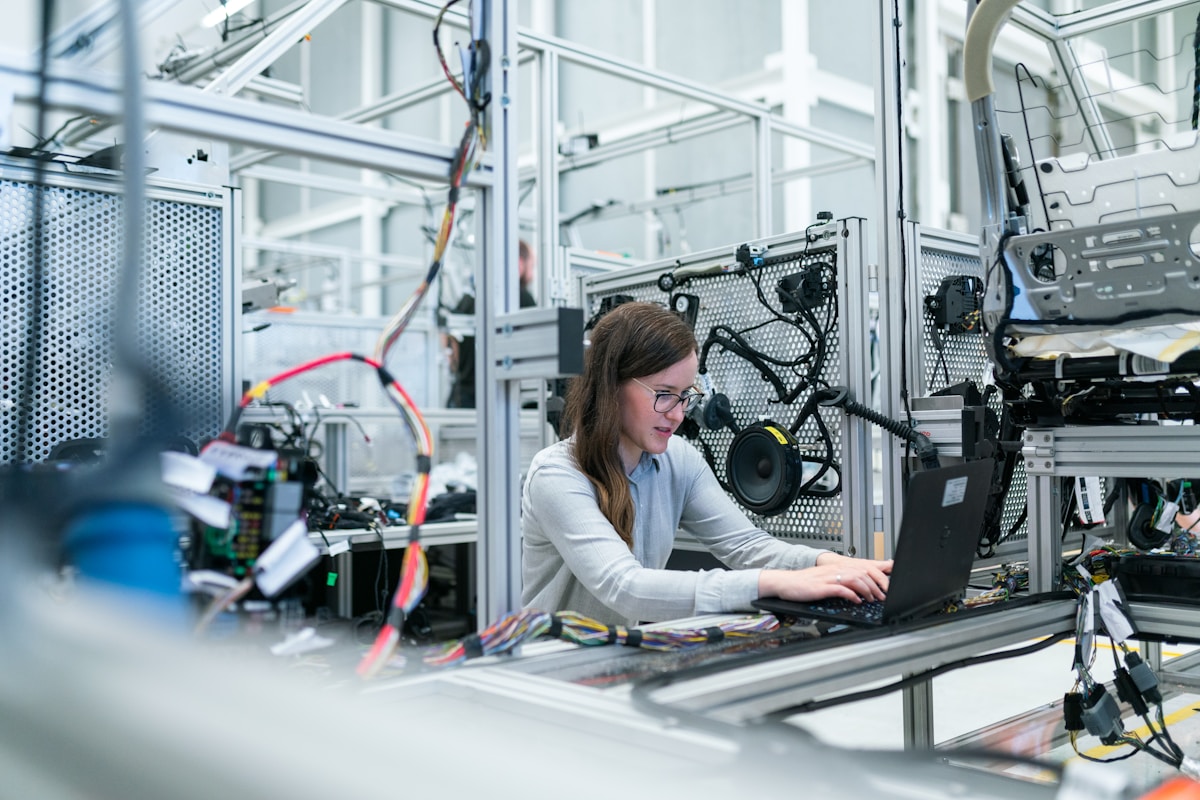
Step 1: Documentation and Measurement
Before anything else, document your original part thoroughly. This step is often rushed, leading to problems later. Take your time here—it's much easier to measure twice than to reprint multiple times.
- Photography – Take photos from all angles with a ruler for scale. Include detail shots of mounting features, textures, and any markings.
- Measurements – Use digital calipers to measure critical dimensions to 0.1mm accuracy. Measure everything multiple times.
- Mounting points – Note how the part attaches (clips, screws, interference fit). Measure hole diameters and positions precisely.
- Material identification – Determine what the original was made from. Often there are recycling codes or manufacturer markings.
- Condition notes – Document any broken sections that need reconstruction. Sometimes you'll need to mirror a partial part.
- Surrounding parts – Measure how the part interfaces with adjacent components.
Step 2: 3D Modeling
There are several paths to creating a 3D model, each with advantages depending on your situation and skills:
3D Scanning: If you have the original part (even if broken), 3D scanning can capture its exact geometry. Consumer scanners like the Revopoint series work well for larger parts, while professional services are better for small, detailed items. Scanning is particularly valuable for complex organic shapes that would be difficult to model manually.
CAD Design: Using software like Fusion 360 (free for hobbyists), SolidWorks, or even free options like FreeCAD, you can model the part from scratch using your measurements. This is often necessary when the original part is too damaged or unavailable. CAD skills take time to develop, but they're invaluable for custom modifications.
Hybrid Approach: Scan the original for reference, then create a clean CAD model based on the scan. This gives you the accuracy of scanning with the editability of CAD.
Existing Files: Check repositories like our parts library, Thingiverse, Printables, and car-specific forums. Someone may have already created the file you need. Even if the exact part isn't available, a similar part might serve as a starting point.
Step 3: Design Optimization
Simply replicating the original design isn't always the best approach. 3D printing allows for improvements, and the manufacturing process has different constraints than injection molding. Smart design optimization can result in parts that are actually better than the originals.
- Strengthen weak points – Add material where original parts commonly break. If you know a mounting tab always snaps, thicken it.
- Adjust tolerances – Account for printing tolerances (typically +/- 0.2mm). Test fit critical interfaces with small test prints.
- Orientation planning – Design with print orientation in mind for maximum strength. Layer lines should run parallel to stress, not perpendicular.
- Support minimization – Modify geometry to reduce or eliminate support structures. Supports leave marks and waste material.
- Add features – Consider improvements like cable routing channels, mounting provisions for modern electronics, or reinforcement ribs.
Step 4: Printing
With your optimized design ready, it's time to produce the physical part. Printing settings dramatically affect part quality and strength.
- Slice the model – Use slicer software (PrusaSlicer, Cura, BambuStudio) to convert the 3D model to printer instructions (G-code).
- Configure settings – Set appropriate layer height (0.2mm for draft, 0.12mm for quality), infill percentage (30-60% for functional parts), and temperature.
- Print a test – Start with a smaller section or draft quality to verify fit before committing to a long final print.
- Final print – Run the full print with final settings. Monitor the first few layers to catch problems early.
Step 5: Post-Processing
Most 3D printed parts benefit from finishing work. The level of finishing depends on whether the part is visible and how closely it needs to match original appearance.
- Support removal – Carefully remove any support structures with flush cutters and a craft knife.
- Sanding – Progressive grits (220→400→800→1200) for smooth surfaces. Wet sanding works well for ABS and ASA.
- Filling – Use filler primer or automotive glazing putty to hide layer lines on visible surfaces.
- Vapor smoothing – ABS parts can be smoothed with acetone vapor for a glossy, injection-molded appearance.
- Painting – Match original colors with automotive paint. Sand between coats for professional results.
- Clear coating – Protect exterior parts with UV-resistant clear coat. 2K clear offers the best protection.
- Texturing – Add grain texture with SEM texture coating to match original interior finishes.
Cost Comparison: 3D Printing vs. Traditional Options
One of the biggest questions classic car owners have is whether 3D printing actually saves money. The short answer is: usually yes, often dramatically. Let's look at real-world cost comparisons for common restoration parts.
| Part Type | NOS/Reproduction | Salvage Yard | 3D Print (DIY) | 3D Print (Service) |
|---|---|---|---|---|
| Dashboard vent bezel | $80-200 | $30-60 | $2-5 | $25-50 |
| Radio knob set (4) | $150-400 | $40-100 | $3-8 | $30-60 |
| Door handle bezel | $60-150 | $25-50 | $2-4 | $20-40 |
| Emblem/badge | $100-500+ | $50-150 | $5-15 | $40-100 |
| Wiring clips (set of 20) | $40-80 | N/A | $1-3 | $15-30 |
| Custom gauge surround | $200-500 | Rarely available | $10-25 | $75-150 |
| Complete trim kit (20+ pieces) | $500-2000+ | $200-500 | $30-80 | $300-600 |
The economics become even more favorable when you factor in hidden costs and benefits:
- Search time – No more spending hours or days tracking down parts at swap meets and online
- Shipping – DIY prints have no shipping costs; no waiting for packages
- Spares – Print extras at marginal cost for future needs or to share with the community
- Customization – Modify parts at no additional cost to fit your specific needs
- Iteration – Test fit and refine without paying for new parts each time
- Independence – No reliance on suppliers who might go out of business
💰 Real Cost Savings Example
A member of our community restored a 1972 Datsun 240Z and 3D printed over 40 interior trim pieces. Total filament cost: approximately $45. Equivalent reproduction parts would have cost over $2,000—if they were even available. The project was documented on Instagram and inspired dozens of others to start printing parts for their Z cars.
Real-World Success Stories
Across the classic car community, enthusiasts are using 3D printing to solve restoration challenges that would have been impossible just a decade ago. These stories demonstrate the practical impact of this technology.
Case Study: 1969 Camaro Inferno Build
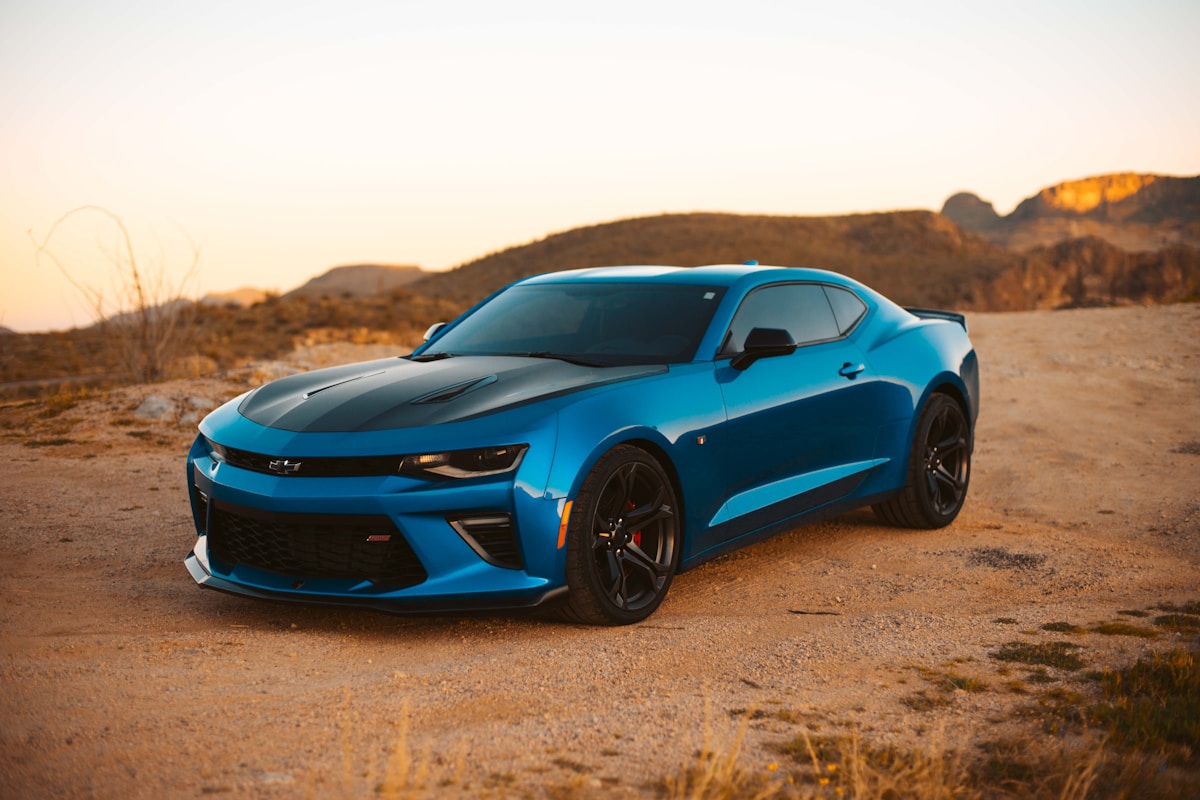
The Roadster Shop, featured by MatterHackers, used 3D printing extensively on their award-winning Inferno 1969 Camaro build. Designer Chris Grey created custom backing plates and trim pieces that would have required expensive tooling for traditional manufacturing. The build won the Goodguys 'Gold' Award at SEMA, proving that 3D printed parts can meet the highest standards of show car quality.
Case Study: Datsun 620 Complete Restoration
Maker Michael O'Brien documented his Datsun 620 restoration where he 3D printed over 50 components, with plans for hundreds more. Parts included custom gauge clusters, switch legend plates, illuminated trim rings, and countless brackets and clips. The project showcases how 3D printing enables both restoration and personalization—parts can be exact replicas or improved versions with modern touches.
Case Study: 1937 Ford Eifel Preservation
Artec 3D partnered with a restoration shop to scan an entire 1937 Ford Eifel, creating a complete digital archive. This allowed the team to reproduce parts without requiring original manufacturer specifications—a breakthrough for truly rare vehicles where documentation no longer exists. The digital archive ensures that future restorations of this model will always have access to accurate part geometries.
Case Study: Porsche Classic Parts Program
Even major manufacturers have embraced 3D printing for classic parts. Porsche's Classic Parts division uses selective laser sintering (SLS) to produce obsolete components for vintage 911s and other models. The program started with the clutch release lever for the 959 and has expanded to dozens of parts. If it works for Porsche, it can work for your project too.
Case Study: Mercedes-Benz Classic
Mercedes-Benz Classic Center uses 3D printing to produce replacement parts for vehicles dating back to the 1950s. Parts range from simple clips to complex components, all manufactured on demand without requiring traditional tooling investments. This approach has made previously impossible restorations economically viable.
Getting Started: Your Options
Ready to start 3D printing parts for your classic car? There are several paths depending on your budget, skills, and time. None is inherently better than the others—the right choice depends on your situation.
Option 1: DIY Printing
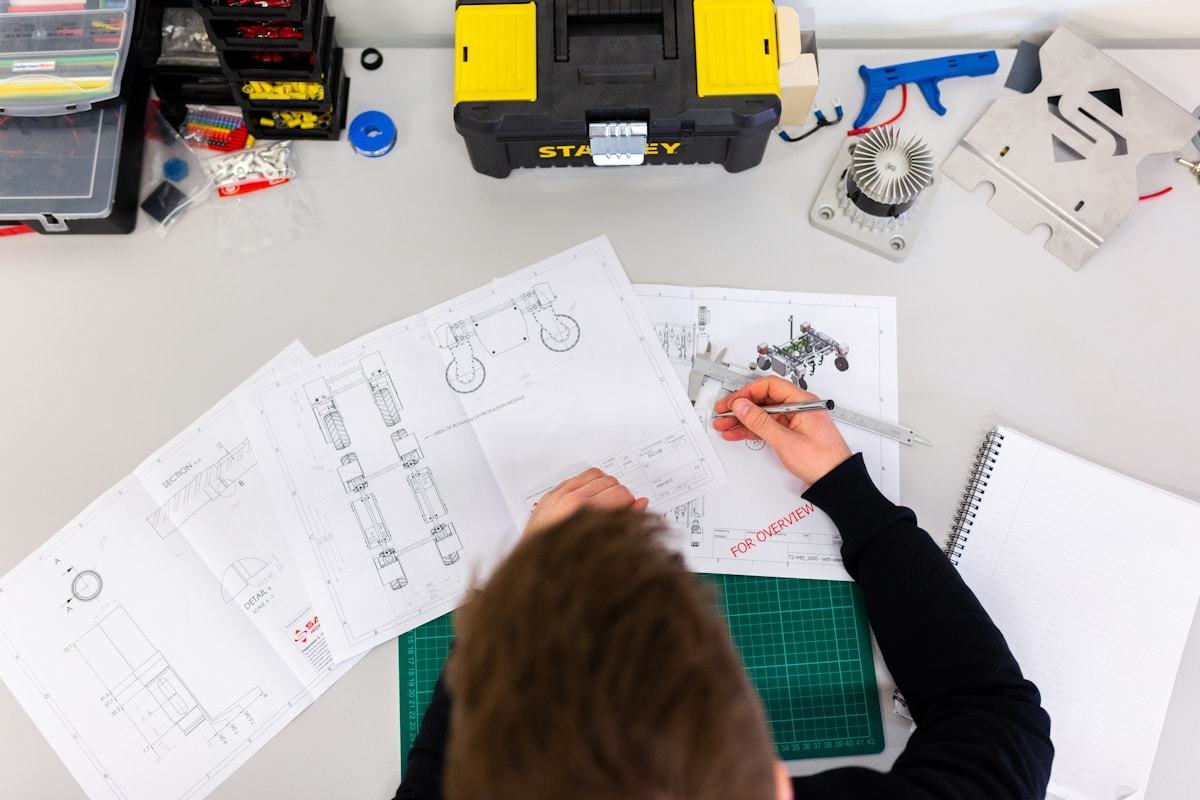
If you're technically inclined and enjoy the maker aspect, investing in your own printer makes sense. The learning curve is real, but the capability to produce parts on demand is invaluable for serious restorers.
Entry Level ($200-400): Printers like the Creality Ender 3 or Anycubic Kobra can produce quality parts with some learning curve. Great for interior trim and testing designs. These printers require more setup and calibration but offer excellent value.
Mid-Range ($400-1000): Printers like the Prusa MK3S+ or Bambu Lab P1S offer better reliability and quality out of the box. Excellent for most classic car parts. The Bambu Lab printers in particular have revolutionized ease of use in this price range.
Enclosed Printers ($500-2000): Required for ASA and ABS printing. The Bambu Lab X1C or Prusa Enclosure kit enable weather-resistant exterior parts. Enclosures maintain consistent temperature for warp-free printing of engineering materials.
For detailed guidance on selecting the right printer, check out Formlabs' comprehensive comparison of printing technologies. Their guide covers not just FDM but also resin printing, which excels for highly detailed small parts.
Option 2: Print Services
Don't want to invest in equipment? Professional services offer high-quality results without the learning curve:
- Online services – Upload your file to Craftcloud, Shapeways, or JLCPCB 3D printing for quotes and production
- Local makerspaces – Many communities have shared printing facilities with knowledgeable staff
- Specialty automotive shops – Companies like HV3DWorks focus specifically on collector cars
- Community members – Fellow enthusiasts in our forum often help with prints for cost of materials
- Local print shops – Search for "3D printing service" in your area for face-to-face service
Option 3: Use Existing Files
Before designing from scratch, check if someone has already created what you need. The classic car 3D printing community is collaborative, and many files are freely shared:
- Our parts library – Growing collection of classic car-specific files
- Thingiverse – Search for your make and model; large existing database
- Printables – Prusa's repository with quality files and active community
- Car-specific forums – Many marque clubs have members sharing files in dedicated threads
- Facebook groups – Model-specific groups often have shared resources and helpful members
- GitHub – Some makers share open-source automotive projects
📦 What You'll Need to Get Started
- ✅ Digital calipers (for accurate measurements) - $15-30
- ✅ 3D printer or access to printing services
- ✅ CAD software (Fusion 360 free for hobbyists)
- ✅ Appropriate filament (ASA for exterior, ABS for interior) - $25-40/kg
- ✅ Basic finishing supplies (sandpaper, primer, paint) - $30-50
- ✅ Patience and willingness to iterate
- ✅ Reference materials (service manuals, photos, factory literature)
Common Challenges and Solutions
Every technology has its learning curve. Here are the most common issues classic car enthusiasts encounter with 3D printing, along with proven solutions from the community.
Challenge: Parts Don't Fit
Cause: Measurement errors, printer calibration issues, or material shrinkage.
Solution: Always print a test piece first. Calibrate your printer using test cubes and verify dimensions with calipers. Account for material shrinkage (ABS shrinks about 0.7%, ASA about 0.4%). Design with appropriate clearances—0.2mm for sliding fits, 0.1mm for press fits.
Challenge: Parts Warp in Heat
Cause: Using the wrong material for high-temperature applications.
Solution: Use ASA or ABS for anything exposed to sun. Never use PLA for any automotive application—it will deform. Consider heat-treating ABS parts (annealing) to improve temperature resistance. For extreme applications, look into PETG-CF or high-temp materials.
Challenge: Layer Lines Visible
Cause: FDM printing inherently creates visible layers due to the extrusion process.
Solution: Use smaller layer heights (0.12mm vs 0.2mm) for better surface quality. Orient parts strategically so layer lines follow natural contours. Use post-processing—sanding, filler primer, vapor smoothing for ABS. For highly visible parts, consider SLA/resin printing which produces much smoother surfaces.
Challenge: Parts Are Too Brittle
Cause: Insufficient infill, wrong print orientation, or unsuitable material.
Solution: Increase infill to 40-60% for functional parts. Print so layer lines run parallel to stress forces, not perpendicular—this dramatically affects strength. Use nylon or CF-reinforced materials for high-stress applications. Ensure proper print temperature for full layer adhesion.
Challenge: Color Doesn't Match
Cause: Filament colors rarely match original automotive colors precisely.
Solution: Print in a neutral color (gray or black) and paint to match. Automotive touch-up paint or vinyl dye can create perfect matches. This approach also allows for color changes if desired. Document the paint codes you use for future reference.
Challenge: Parts Crack Over Time
Cause: Environmental stress cracking or material fatigue.
Solution: Use appropriate materials for the environment. Avoid using ABS in high-stress applications where nylon would be better. Ensure parts aren't over-tightened during installation. Consider annealing parts to relieve internal stresses from printing.
🔧 Community Tip
Join our community forum to ask questions and learn from experienced makers. The classic car 3D printing community is incredibly helpful, and someone has likely solved the exact problem you're facing. Share your successes too—your solution might help the next person.
The Future of Classic Car Restoration
3D printing technology continues to advance rapidly, and the implications for classic car enthusiasts are exciting. What's possible today is just the beginning.
Metal 3D Printing
While currently expensive, metal 3D printing (DMLS, binder jetting) is becoming more accessible. Companies like ExOne have partnered with classic car specialists to produce metal components—everything from brackets to gear shifter knobs. Within the next decade, printing metal components may become affordable for individual restorers. Already, services exist that can print metal parts from your digital files.
Advanced Materials
New filaments with carbon fiber reinforcement, improved temperature resistance, and better UV stability emerge regularly. Materials that closely mimic original automotive plastics from specific eras are being developed. We're seeing filaments designed specifically for automotive applications with properties optimized for under-hood and exterior use.
Community Part Libraries
As more enthusiasts share their designs, comprehensive libraries for specific makes and models are growing. The day is coming when you'll be able to download an entire trim kit for your classic car. Our parts library is part of this movement—every contribution helps fellow enthusiasts.
AI-Assisted Design
Emerging AI tools can generate 3D models from photographs, potentially allowing anyone to recreate parts without CAD expertise. This democratizes the technology further, making it accessible to restorers who love cars but don't have engineering backgrounds.
Distributed Manufacturing
As 3D printers become more common, a network of local makers can produce parts on demand anywhere in the world. Need a part for your European car while in the US? Download the file and print it locally.

Best Practices for Restoration Authenticity
For concours-level restorations or judged shows, authenticity matters. Here's how to use 3D printing while maintaining originality and satisfying even the most discerning judges:
- Document everything – Keep records showing 3D printed parts are exact replicas of unavailable originals. Photograph the original, document measurements, and save the CAD files.
- Use appropriate materials – Match original material types where possible (ABS for ABS parts). The goal is functional equivalence.
- Replicate manufacturing marks – Include date codes, part numbers, and manufacturer logos in your designs where appropriate for the application.
- Finish properly – Period-correct textures and finishes maintain authenticity. Study original parts to match grain patterns and surface treatments.
- Keep originals – Store damaged original parts as references and provenance. They prove what you were replicating.
- Disclose transparently – Be upfront about reproduced parts. Judges appreciate honesty and craftsmanship.
Many concours judging organizations are beginning to accept 3D printed parts when originals are genuinely unavailable, especially for non-visible components. Check with SAE International and specific marque clubs for current guidance on restoration standards.
Join the Revolution
3D printing has transformed from a novelty into an essential tool for classic car restoration. Whether you're bringing a barn find back to life, maintaining a daily-driver classic, or building a show car, this technology opens doors that were previously closed.
The classic car community has always been about passion, problem-solving, and preservation. 3D printing fits perfectly into that tradition—it's just a new tool for an age-old pursuit. The makers, designers, and enthusiasts in this community are writing the next chapter of automotive restoration history.
Ready to Start Your 3D Printing Journey?
Join thousands of classic car enthusiasts who are already using 3D printing to solve their restoration challenges. Share designs, get help, and connect with fellow makers.
Join Our Community Browse Parts Library
Frequently Asked Questions
Are 3D printed parts as durable as original parts?
When using appropriate materials (ABS, ASA, Nylon) and proper print settings, 3D printed parts can match or exceed original durability. The key is material selection for the specific application. Many original parts from the 60s-80s were made from ABS—the same material we print with today.
Will 3D printed parts devalue my classic car?
For most classics, using quality 3D printed parts for unavailable components actually preserves value by keeping the car complete and functional. A car with 3D printed trim is worth more than a car with missing trim. For concours-level vehicles, document everything and consult judging guidelines.
How much does it cost to get started with 3D printing for car parts?
Entry-level printers capable of producing quality car parts start around $200-400. Filament costs $20-40 per kg, and a kilogram can print dozens of small parts. Alternatively, print services charge $20-100+ per part depending on size and material. Many restorers find the printer pays for itself within the first project.
Can I 3D print chrome trim or metal parts?
Plastic parts can be chrome-plated or vacuum-metalized after printing for chrome appearance. Companies like Repliform specialize in plating 3D printed parts. Actual metal 3D printing exists but requires industrial equipment. For functional metal parts, print a plastic prototype and have it cast in aluminum or bronze using the lost-PLA casting method.
Where can I find 3D files for my specific car?
Start with our parts library, then check Thingiverse, Printables, and model-specific forums. If your part doesn't exist, post a request in our community forum—someone may have it or be willing to design it. Many marque-specific clubs have dedicated 3D printing sections.
What software do I need to design my own parts?
Fusion 360 offers a free license for hobbyists and is excellent for mechanical parts. FreeCAD is completely free and open source. For simpler parts, TinkerCAD is browser-based and beginner-friendly. Blender works well for organic shapes. Most slicers (PrusaSlicer, Cura) are free.
How long does it take to learn 3D printing?
Basic printing skills can be learned in a weekend. CAD design takes longer—budget 2-4 weeks of practice to become comfortable with simple parts. Complex automotive parts might take months to master. But you don't have to do everything yourself—the community is here to help, and service bureaus can print your designs.
Take Action Today
Don't let your classic car project stall because of unavailable parts. Whether it's a single missing knob or a complete interior trim kit, 3D printing offers a solution that was impossible just a few years ago. The technology is accessible, the community is welcoming, and the results speak for themselves.
- Explore – Browse our parts library to see what's already available for your make and model
- Connect – Join our community of classic car enthusiasts and makers
- Ask – Post in the forum with your specific part needs
- Learn – Check out our other guides and tutorials
- Contribute – Share your designs to help fellow enthusiasts
The unobtainium era is ending. Welcome to the age of 3D printed classic car parts.
Have a Part You Can't Find?
Tell us what you're looking for. Our community of designers and makers might be able to help create it. Every request helps build our library for future restorers.
Request a PartReference shelf
Materials and equipment referenced here
Optional product references matched to the material or printer discussion above. Use the specifications—not the brand name—to decide what fits your setup.
| Referenced item | What to verify | Price & availability |
|---|---|---|
| PETG filamentAmazon · Affiliate link | Amazon product page for 1.75 mm PETG; confirm colour, spool size, print temperature, seller, and delivery region. | Check price at Amazon |
| ASA filamentAmazon · Affiliate link | Amazon product page for 1.75 mm ASA; use an enclosure and suitable ventilation, and confirm seller and regional availability. | Check price at Amazon |
| ABS filamentAmazon · Affiliate link | Amazon product page for 1.75 mm ABS; use an enclosure and suitable ventilation, and verify temperature requirements and seller. | Check price at Amazon |
Affiliate disclosure: if you buy through an eligible link, 3DPrintedCarPart may earn a commission at no extra cost to you. As an Amazon Associate I earn from qualifying purchases. Confirm product specifications, compatibility, seller terms, and vehicle safety before ordering or using anything. Amazon may redirect you to a nearby supported store; otherwise the original Amazon.com page remains available.


