

When your car needs a replacement part, you face a critical decision: should you purchase an OEM (Original Equipment Manufacturer) part from the dealership, or could a 3D printed alternative serve your needs just as well—or even better? This question is increasingly relevant as 3D printing technology becomes more accessible to everyday car enthusiasts, mechanics, and hobbyists.
The reality is that neither option is universally "better"—each has distinct advantages depending on the specific part, your vehicle, your budget, and your goals. In this comprehensive comparison, we'll analyze 3D printed car parts vs OEM across every important dimension: cost, quality, availability, customization, durability, and safety. By the end, you'll have the knowledge to make informed decisions about when to print and when to buy. Whether you're exploring our parts library or considering traditional replacement options, understanding these tradeoffs is essential.
Understanding OEM Parts: What You're Really Paying For
OEM parts are components manufactured by the same company that made the original parts installed in your vehicle at the factory. When you buy an OEM brake caliper for your Honda Civic, it comes from the same supplier that provided the part to Honda during vehicle assembly. This consistency is the primary value proposition of OEM components—you know exactly what you're getting.

The OEM Quality Standard
OEM parts undergo rigorous testing and quality control processes before reaching consumers. Automakers invest billions in research and development to ensure every component meets specific tolerances, material specifications, and performance standards. For safety-critical components like brake systems, suspension parts, and structural elements, this level of engineering validation is essential.
Key characteristics of OEM parts include:
- Exact Fit Guarantee: Designed specifically for your vehicle make, model, and year with precise dimensional tolerances
- Material Certification: Manufactured from approved materials that meet automotive industry standards
- Factory Warranty: Typically backed by manufacturer warranties, protecting your investment
- Documentation: Full technical specifications, installation instructions, and compliance certifications available
- Insurance Acceptance: Universally accepted by insurance companies for collision repairs
- Resale Value: Maintaining OEM parts can preserve vehicle resale value for premium and collector cars
⚠️ The OEM Price Premium
OEM parts typically cost 40-60% more than aftermarket alternatives and can be 10-100x more expensive than 3D printed equivalents for non-critical components. A simple plastic trim clip that costs $0.05 to 3D print might be $5-15 as an OEM part. This markup reflects brand value, dealer margins, and supply chain costs—not necessarily superior quality for simple components.
3D Printed Car Parts: The New Alternative
3D printed car parts represent a fundamentally different approach to automotive components. Instead of mass-manufactured parts shipped through global supply chains, 3D printing enables on-demand creation of parts exactly when and where they're needed. This paradigm shift offers unique advantages that OEM parts simply cannot match—along with limitations that require honest acknowledgment.

How 3D Printing Creates Car Parts
Modern 3D printing technologies build parts layer by layer from digital designs. The most common method for automotive applications is Fused Deposition Modeling (FDM), which extrudes melted thermoplastic through a heated nozzle. Other technologies include Stereolithography (SLA) for high-detail parts and Selective Laser Sintering (SLS) for industrial-strength components.
The typical workflow for creating a 3D printed car part involves:
- Design or Download: Create a 3D model using CAD software, or download an existing design from communities like our parts library or Thingiverse
- Slicing: Process the 3D model through slicing software (Cura, PrusaSlicer) to generate printable toolpaths
- Material Selection: Choose the appropriate filament based on the part's requirements (heat resistance, strength, flexibility)
- Printing: Run the print job, which can take anywhere from 30 minutes to 24+ hours depending on part size and complexity
- Post-Processing: Remove support structures, sand surfaces, and optionally paint or coat the finished part
- Testing and Installation: Verify fitment and function before permanent installation
✅ The 3D Printing Advantage
Unlike OEM parts that require minimum order quantities and global shipping, 3D printing allows you to produce exactly one part on demand. Need a replacement clip at 2 AM before a car show? Print it. Need a slightly modified version with different mounting holes? Modify the design and print it. This flexibility is impossible with traditional manufacturing.
Cost Comparison: 3D Printed vs OEM Parts
Cost is often the primary driver for considering 3D printed alternatives to OEM parts. The savings can be dramatic for certain types of components—but the full cost picture requires considering equipment, materials, time, and the value of your labor.

Direct Cost Comparison by Part Type
| Part Type | OEM Price Range | 3D Print Cost | Savings | Notes |
|---|---|---|---|---|
| Trim Clips (10-pack) | $15-50 | $0.50-1.00 | 95-98% | Excellent candidate for printing |
| Cup Holder Insert | $30-80 | $2-5 | 90-95% | Common discontinued part |
| HVAC Vent Louvers | $50-150 | $3-8 | 85-95% | Often breaks on older vehicles |
| Phone Mount Bracket | $25-75 | $2-4 | 90-95% | Often custom for vehicle |
| Shift Knob | $40-200 | $3-10 | 85-95% | Highly customizable |
| Dashboard Trim Piece | $75-300 | $5-20 | 80-95% | May need finishing work |
| Fuse Box Cover | $20-60 | $1-3 | 90-98% | Simple print, perfect fit |
| Mirror Cover | $50-150 | $4-12 | 85-95% | Use ASA for UV resistance |
Total Cost of Ownership Considerations
While material costs for 3D printed parts are dramatically lower, a fair comparison must account for additional factors:
- 3D Printer Investment: Quality FDM printers cost $300-1,500; you'll need to print many parts to offset this initial expense
- Electricity: Running a printer for 10+ hours costs approximately $0.50-2.00 depending on your energy rates
- Failed Prints: Expect 5-15% of prints to fail, especially when learning; factor in wasted material costs
- Time Investment: Your time has value—consider whether spending 4 hours printing a $30 OEM part makes economic sense
- Design Work: If no existing design exists, creating one from scratch can take 2-20+ hours depending on complexity
- Post-Processing: Sanding, painting, and finishing add time and material costs
💡 When 3D Printing Makes Economic Sense
The break-even point for 3D printing typically occurs after producing 20-50 parts, assuming a $500 printer investment. If you're restoring a classic car with dozens of discontinued parts, printing pays off quickly. For a single replacement on a modern vehicle, the economics may favor OEM unless availability is an issue.
Quality and Durability: How Do They Compare?
Quality comparison between 3D printed and OEM parts isn't straightforward—it depends heavily on the specific part, printing technology, material choice, and print settings. Let's examine the key factors that determine whether a 3D printed alternative can match or exceed OEM quality.

Material Properties: OEM vs 3D Printed
OEM plastic parts are typically made through injection molding, which creates parts with consistent density and predictable mechanical properties throughout. 3D printed parts, by contrast, are built layer by layer, which can introduce anisotropic properties—meaning the part may be weaker in certain directions.
| Property | OEM (Injection Molded) | 3D Printed (FDM) | Winner |
|---|---|---|---|
| Surface Finish | Smooth, consistent | Visible layer lines (can be sanded) | OEM |
| Dimensional Accuracy | ±0.05mm typical | ±0.1-0.3mm typical | OEM |
| Layer Adhesion Strength | N/A (homogeneous) | 70-90% of material strength | OEM |
| Customization | Fixed design only | Infinitely customizable | 3D Print |
| Repair/Modification | Replace entire part | Reprint with modifications | 3D Print |
| Material Options | Factory-specified only | Wide range of materials | 3D Print |
| Heat Resistance | Engineered for application | Material-dependent (can exceed OEM) | Varies |
| Long-term Durability | Proven over decades | Less long-term data available | OEM |
Improving 3D Printed Part Quality
While 3D printed parts may not match OEM quality out of the box, several techniques can close the gap significantly:
- Increase Infill Density: Using 50-100% infill creates nearly solid parts with strength approaching injection-molded equivalents
- Optimize Layer Height: Thinner layers (0.12-0.16mm) improve surface finish and interlayer adhesion
- Anneal Printed Parts: Heat treatment of PETG, ABS, and nylon parts in an oven can increase crystallinity and strength by 20-40%
- Choose Premium Materials: Engineering-grade filaments like carbon fiber reinforced nylon can exceed the strength of many OEM plastics
- Post-Process Surfaces: Sanding, vapor smoothing (for ABS), or applying filler primer can achieve near-OEM surface finishes
Availability: When OEM Parts Don't Exist
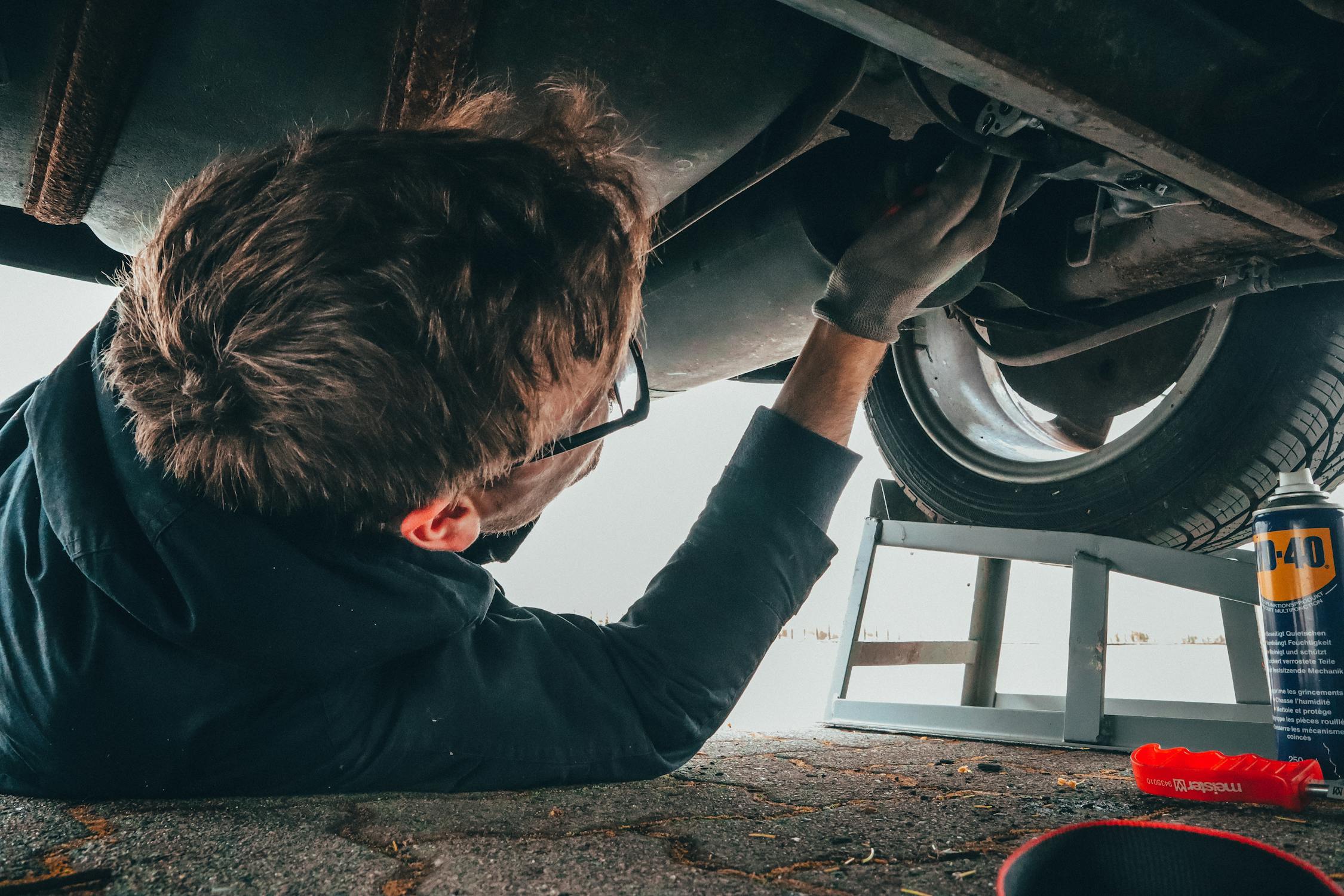
One of the most compelling arguments for 3D printed car parts isn't about cost or quality—it's about availability. Millions of vehicles on the road have discontinued parts that simply cannot be purchased from any OEM source. This is where 3D printing transforms from a cost-saving alternative to the only viable option.
The Discontinued Parts Problem
Automakers typically produce OEM replacement parts for 10-15 years after a vehicle goes out of production. After that, parts become increasingly difficult—and eventually impossible—to source. This affects:
- Classic Car Owners: Vehicles from the 1960s-1990s may have zero OEM parts availability for interior components, trim pieces, and non-critical mechanical parts
- Enthusiast Vehicle Owners: Low-production sports cars and specialty vehicles often have limited parts runs that sell out quickly
- Economy Car Owners: Manufacturers prioritize luxury vehicle parts over economy models; a 20-year-old Corolla may have fewer available parts than a 30-year-old BMW
- International Vehicle Owners: Parts for vehicles never sold in your region may be impossible to import or prohibitively expensive
🔧 Real-World Example: Classic Miata Restoration
The 1990-1997 Mazda Miata (NA) has a passionate community, but many interior trim pieces are now discontinued. A broken HVAC control panel face, cracked door handle trim, or missing center console insert might mean hunting eBay for months—or 3D printing a replacement in hours. Our community forum has dozens of Miata owners sharing designs for these exact scenarios.
Availability Comparison by Vehicle Age
| Vehicle Age | OEM Availability | Aftermarket Availability | 3D Print Advantage |
|---|---|---|---|
| 0-5 Years | Excellent | Limited | Low (cost savings only) |
| 5-10 Years | Good | Growing | Moderate |
| 10-15 Years | Declining | Good | High |
| 15-25 Years | Poor to None | Variable | Very High |
| 25+ Years (Classic) | None | Reproduction Only | Essential |
Safety Considerations: Understanding the Limits
Safety is the most critical factor when deciding between 3D printed and OEM parts. While 3D printing excels for many applications, some components should always be sourced from OEM or certified aftermarket suppliers. Understanding these boundaries is essential for responsible use of 3D printed automotive parts.

Parts You Should NEVER 3D Print
Certain automotive components are simply too critical for 3D printed alternatives, regardless of material quality or print settings:
- Brake Components: Calipers, rotors, pads, brake lines, and mounting hardware—failure means loss of stopping power
- Suspension Parts: Control arms, ball joints, tie rods, and structural suspension components must withstand extreme loads
- Steering Components: Any part connecting the steering wheel to the road wheels is safety-critical
- Seatbelt Hardware: Buckles, anchors, and pretensioner components are engineered to exact specifications
- Airbag Components: Never modify or replace airbag housings, mounts, or related parts
- Structural Body Parts: Crash-absorbing structures like crumple zones and reinforcements protect occupants
- Fuel System Components: Fuel lines, fuel rail mounts, and tank components must resist chemical attack and fire
- Wheel Components: Never 3D print anything that attaches the wheel to the vehicle (lug nuts, wheel spacers, hub adapters)
🚨 Critical Safety Warning
3D printed parts should NEVER be used for any component where failure could result in loss of vehicle control, injury, or death. When in doubt, use OEM or certified aftermarket parts. The cost savings are never worth risking lives. Even materials marketed as "high-strength" may not perform adequately under the extreme conditions automotive safety components experience.
Parts That Are SAFE to 3D Print
Many automotive components are perfectly suitable for 3D printing because their failure would not create safety hazards:
- Interior Trim: Dashboard panels, center console covers, door panel inserts, speaker grilles
- Mounting Brackets: Phone mounts, dash cam holders, accessory brackets (non-structural)
- Cosmetic Covers: Fuse box covers, engine bay dress-up parts, exterior badges
- HVAC Components: Vent louvers, knobs, air direction adjusters, duct adapters
- Fasteners: Trim clips, panel retainers, wire management clips
- Accessories: Cup holder inserts, sunglasses holders, storage organizers
- Custom Parts: Gauge pods, switch panels, shift knobs (non-structural mounting)
Customization: Where 3D Printing Shines
If there's one area where 3D printed parts definitively surpass OEM, it's customization. OEM parts are designed for mass production—one size fits all. 3D printing enables endless customization possibilities that simply don't exist with factory components.

Customization Possibilities
- Perfect Fitment Adjustments: Modify a design by 0.5mm to account for manufacturing variations in your specific vehicle
- Personalized Aesthetics: Choose any color, add textures, incorporate logos, or match existing trim exactly
- Functional Improvements: Add mounting points, strengthen weak areas, or improve on the original design
- Integration Features: Combine multiple parts into one, add cable routing, or integrate accessory mounts
- Size Modifications: Scale parts for non-standard applications or different vehicle models
- Accessibility Modifications: Create larger knobs, modified controls, or ergonomic improvements for specific needs
For enthusiasts who want their vehicles to reflect their personality, 3D printing enables a level of customization that's impossible with OEM parts. The maker community has created thousands of car-specific designs, and with basic CAD skills, you can create entirely unique parts that no one else has.
Environmental Considerations
Sustainability is increasingly important to car owners, and the environmental impact of parts sourcing deserves consideration. Both OEM and 3D printed parts have environmental tradeoffs worth understanding.

OEM Parts Environmental Impact
- Global Shipping: Parts manufactured overseas travel thousands of miles to reach consumers
- Packaging Waste: Significant plastic and cardboard packaging for each individual part
- Minimum Order Quantities: Manufacturers produce large batches, creating excess inventory that may become waste
- Overproduction: Estimating demand leads to surplus parts that are eventually scrapped
3D Printed Parts Environmental Impact
- On-Demand Production: Print only what you need, when you need it—zero inventory waste
- Local Production: No shipping from overseas factories; reduce transportation emissions
- Material Options: Biodegradable PLA available for non-critical applications; recycled filaments growing in availability
- Energy Consumption: 3D printers do consume electricity; longer prints have measurable energy costs
- Failed Prints: Failed or test prints create plastic waste that's difficult to recycle (though filament recycling is emerging)
🌱 The Sustainability Verdict
For single parts or small quantities, 3D printing likely has a lower environmental footprint due to eliminated shipping and packaging. For mass production, injection molding remains more efficient per-part. The most sustainable approach combines both: use OEM for high-volume, safety-critical parts, and 3D print for custom, low-volume, and replacement applications.
Legal and Insurance Considerations
Before extensively using 3D printed parts on your vehicle, understanding the legal and insurance implications is important. Regulations vary by jurisdiction, and insurance policies may have specific requirements about vehicle modifications.

Vehicle Inspection Implications
In regions with mandatory vehicle safety inspections, modified components may affect compliance:
- Cosmetic Parts: Generally not inspected or regulated; safe to replace with 3D printed versions
- Lighting Components: May be regulated; 3D printed housings are typically acceptable if they don't affect beam pattern or color
- Exhaust Components: May require OEM or certified aftermarket parts in emissions-regulated areas
- Structural Modifications: May void roadworthiness certificates in some jurisdictions
Insurance Considerations
Contact your insurance provider to understand their position on aftermarket and 3D printed parts:
- Disclosure Requirements: Some policies require disclosure of significant modifications
- Collision Claims: Insurers may require OEM parts for collision repairs; aftermarket or 3D printed parts may affect claim settlements
- Liability Concerns: If a 3D printed part contributes to an accident, liability questions may arise
- Specialty Vehicle Insurance: Classic car policies often have different modification rules than standard auto insurance
Making the Right Choice: Decision Framework
With all factors considered, how do you decide between 3D printed and OEM parts for your specific situation? Use this decision framework to guide your choice:

Choose OEM Parts When:
- Safety is involved: Any component whose failure could cause injury or loss of vehicle control
- Warranty matters: Vehicle is under manufacturer warranty and you want to maintain coverage
- Certification required: Part requires specific certifications (emissions, crash testing, etc.)
- Resale value priority: Maintaining all-OEM status for collector or high-value vehicles
- Insurance requirements: Your policy specifies OEM parts for claims
- Time is critical: You need the part immediately and can't wait for printing/design
Choose 3D Printed Parts When:
- OEM is unavailable: Discontinued parts or rare vehicles with no supply
- Customization needed: You want modifications not available from any manufacturer
- Cost is prohibitive: OEM pricing is unreasonably high for non-critical components
- Multiple parts needed: Bulk replacement where 3D printing economies kick in
- Improvement desired: You want to improve on the original design
- DIY preference: You enjoy the maker aspect and have the skills/equipment
Ready to Explore 3D Printed Car Parts?
Join our community of automotive makers and DIY enthusiasts. Browse thousands of printable car parts, share your own designs, and connect with fellow car enthusiasts.
Create Your Free AccountGetting Started with 3D Printed Car Parts
If you've decided that 3D printing is right for your automotive project, here's a practical roadmap to get started:
Step 1: Assess Your Needs
Start by identifying which parts you want to print and their requirements:
- What parts do you need to replace or create?
- What temperatures and conditions will they experience?
- What strength and durability requirements exist?
- Are existing designs available, or will you need to create them?
Step 2: Choose Your Equipment
Select a 3D printer appropriate for automotive applications. For most car parts, an FDM printer with an enclosed build chamber and heated bed is ideal. Popular choices include the Prusa MK4, Bambu Lab P1S, and Creality K1 Max—all capable of printing engineering-grade materials.
Step 3: Learn the Materials
Familiarize yourself with automotive-appropriate materials:
- PETG: Great all-around choice for interior parts
- ASA: Best for exterior and UV-exposed components
- ABS: Classic choice for under-hood applications
- Nylon: Strongest option for high-wear parts
Step 4: Find or Create Designs
Explore existing designs in our parts library or communities like Thingiverse and Printables. If no design exists, learn basic CAD using free software like Fusion 360, FreeCAD, or Onshape. Many car parts are simple enough for beginners to model.
Step 5: Test and Iterate
Print test versions in cheap PLA before committing to expensive materials. Verify fitment, check for clearance issues, and make adjustments. This iterative approach is one of 3D printing's greatest advantages—you can refine designs until they're perfect.
Community Resources and Next Steps
You don't have to figure this out alone. The 3D printed car parts community is active, helpful, and constantly sharing new designs and techniques.
Where to Find Designs
- 3D Printed Car Part Library: Our curated collection of verified automotive parts
- Vehicle-Specific Forums: Many car communities have dedicated 3D printing sections
- Thingiverse/Printables: Large repositories of free designs
- Cults3D: Premium designs often with higher quality and documentation
Where to Get Help
- Community Forum: Ask questions, share projects, get feedback from experienced makers
- Reddit r/3Dprinting and r/functionalprint: Active communities for troubleshooting
- Discord Servers: Real-time help from the 3D printing community
- YouTube: Countless tutorials on printing, CAD, and automotive applications
Conclusion: The Future is Hybrid
The debate between 3D printed car parts vs OEM doesn't have a single winner—the best approach combines both technologies strategically. OEM parts remain essential for safety-critical components, warranty considerations, and when certified quality is required. 3D printed parts excel for discontinued components, custom modifications, cost-sensitive non-critical parts, and situations where traditional manufacturing simply can't meet your needs.
The automotive industry is evolving rapidly. Major manufacturers including BMW, Ford, and Porsche are integrating 3D printing into their production processes. As technology advances, the line between "printed" and "traditionally manufactured" will continue to blur—with printed parts becoming increasingly indistinguishable from injection-molded OEM components.
For now, the power is in your hands. Whether you're restoring a classic car, customizing your daily driver, or simply saving money on expensive dealership parts, 3D printing offers unprecedented possibilities. The key is understanding when each approach makes sense—and this guide has given you the framework to make those decisions confidently.
Join the 3D Printing Revolution
Browse our library of printable car parts, share your own designs, and connect with thousands of automotive makers worldwide.
Frequently Asked Questions
Are 3D printed car parts legal?
Yes, for most applications. There are no laws prohibiting 3D printed parts for cosmetic or non-safety-critical components. However, parts affecting emissions or safety systems may be regulated in some jurisdictions. Always check local regulations and consult your insurance provider.
How long do 3D printed car parts last?
With appropriate material selection, 3D printed parts can last as long as OEM components—often 10+ years for interior parts. UV-resistant materials like ASA are essential for exterior applications. The key is matching material properties to the application's demands.
Can I sell 3D printed car parts?
Yes, but with important caveats. You should not replicate patented or trademarked designs without permission. Original designs or out-of-patent parts can be sold legally. Always include appropriate disclaimers about intended use, and never sell safety-critical components.
What's the best 3D printer for car parts?
For most automotive applications, a core-XY FDM printer with an enclosed build chamber is ideal. Popular choices include the Bambu Lab P1S ($700), Prusa MK4 with enclosure ($1,200), and Creality K1 Max ($800). These can print engineering-grade materials like ABS, ASA, and nylon effectively.
Will 3D printed parts void my warranty?
Replacing cosmetic or non-critical parts typically does not affect warranty coverage. However, if a 3D printed part causes damage to other systems, that damage may not be covered. When in doubt, consult your dealer or review your warranty documentation.
Reference shelf
Materials and equipment referenced here
Optional product references matched to the material or printer discussion above. Use the specifications—not the brand name—to decide what fits your setup.
| Referenced item | What to verify | Price & availability |
|---|---|---|
| PETG filamentAmazon · Affiliate link | Amazon product page for 1.75 mm PETG; confirm colour, spool size, print temperature, seller, and delivery region. | Check price at Amazon |
| ASA filamentAmazon · Affiliate link | Amazon product page for 1.75 mm ASA; use an enclosure and suitable ventilation, and confirm seller and regional availability. | Check price at Amazon |
| ABS filamentAmazon · Affiliate link | Amazon product page for 1.75 mm ABS; use an enclosure and suitable ventilation, and verify temperature requirements and seller. | Check price at Amazon |
Affiliate disclosure: if you buy through an eligible link, 3DPrintedCarPart may earn a commission at no extra cost to you. As an Amazon Associate I earn from qualifying purchases. Confirm product specifications, compatibility, seller terms, and vehicle safety before ordering or using anything. Amazon may redirect you to a nearby supported store; otherwise the original Amazon.com page remains available.


