

The automotive industry is undergoing a manufacturing revolution, and 3D printing sits at its center. From DIY enthusiasts crafting custom parts in their garages to major automakers like BMW, Ford, and General Motors integrating additive manufacturing into production lines, this technology is reshaping how we think about vehicle components.
Whether you want to restore a classic car, customize your daily driver, or simply understand this transformative technology, this automotive 3D printing guide covers everything from fundamental concepts to advanced production techniques. By the end, you'll know exactly how to leverage 3D printing for your automotive projects.
What is Automotive 3D Printing?
Automotive 3D printing—also called additive manufacturing (AM)—builds three-dimensional parts by depositing material layer by layer. Unlike traditional subtractive manufacturing (cutting material away), 3D printing adds material only where needed, reducing waste and enabling geometries impossible with conventional methods.

In automotive applications, this means creating everything from prototype parts and custom accessories to functional components and discontinued replacement parts. The technology spans multiple printing methods, each with distinct advantages for different use cases.
💡 Key Insight
The global automotive 3D printing market is projected to grow from $4.25 billion in 2023 to $16.84 billion by 2030, representing a CAGR of over 21%. Major automakers are adopting additive manufacturing not just for prototyping, but increasingly for production parts.
Industry Overview: Who's Using 3D Printing?
The adoption of 3D printing spans the entire automotive ecosystem:
- OEM Manufacturers: BMW prints over 300,000 parts annually; GM's Cadillac Celestiq features 130+ additively manufactured components
- Racing Teams: Formula 1 teams use 3D printing for aerodynamic components and rapid iteration during race weekends
- Restoration Specialists: Classic car restorers print discontinued parts that are otherwise "unobtainium"
- Aftermarket Companies: Custom accessory makers leverage AM for low-volume, high-margin products
- DIY Enthusiasts: Home makers print everything from cup holders to air intake systems

This democratization means whether you have a $300 desktop printer or access to industrial equipment, there's a path to creating automotive parts through additive manufacturing.
Types of 3D Printing Technologies for Automotive
Different 3D printing technologies serve different automotive needs. Understanding which to use—and when—is crucial for successful projects.
| Technology | Best For | Materials | Cost Level |
|---|---|---|---|
| FDM/FFF | Functional parts, prototypes, large components | PLA, PETG, ABS, ASA, Nylon, PC, PA-CF | $200-$5,000 |
| SLA/DLP | High-detail parts, smooth finishes, small items | Standard, tough, flexible, castable resins | $200-$10,000 |
| SLS | Production-grade Nylon parts, complex geometry | PA12, PA11, Glass-filled Nylon | $10,000-$500,000 |
| Metal (DMLS/SLM) | Structural metal components, performance parts | Aluminum, Titanium, Steel, Inconel | $100,000+ |
| MJF | Batch production, consistent mechanical properties | PA12, PA11, TPU | $150,000+ |
For most DIY automotive projects, FDM (Fused Deposition Modeling) provides the best balance of cost, material variety, and part strength. This guide focuses primarily on FDM, as it represents the most accessible entry point for automotive makers.
Essential Equipment for Automotive 3D Printing
Starting your automotive 3D printing journey requires the right equipment. Here's what you need based on your goals and budget.

Budget Tier ($200-$500): Getting Started
Entry-level printers can produce quality automotive parts with patience and proper settings:
- Creality Ender-3 V3: Proven workhorse, massive community support, prints PETG well
- Elegoo Neptune 4: Fast printing, good quality, excellent value
- Anycubic Kobra 3: Auto-leveling, user-friendly, decent for ABS with enclosure
Limitation: Open-frame designs struggle with warping-prone materials (ABS, ASA, Nylon) unless you add an enclosure.
Mid-Range ($500-$1,500): Serious Projects
Enclosed printers with better temperature control unlock engineering-grade materials:
- Bambu Lab P1S: Enclosed, fast, excellent quality—the gold standard for prosumer automotive printing
- Creality K1C: Carbon-fiber capable, enclosed, great for functional parts
- Qidi X-Plus 3: Dual extrusion option, solid for multi-material projects
Professional ($2,000+): Production Quality
For demanding applications or small-batch production:
- Bambu Lab X1-Carbon: Industry-leading speed and reliability
- Qidi X-Max 3: Large build volume (325×325×315mm), true engineering-grade capability
- Raise3D Pro3 Series: Professional reliability, IDEX dual extrusion
⚠️ Critical Requirement
For automotive applications, an enclosed printer is essential. Materials like ASA, ABS, and Nylon—which offer the heat resistance needed for car parts—require consistent chamber temperatures to prevent warping and layer separation. An open-frame printer with a DIY enclosure can work, but purpose-built enclosed machines save significant troubleshooting time.
Automotive 3D Printing Materials Guide
Material selection determines whether your part survives in a vehicle. Different locations experience vastly different conditions—from UV-battered exterior panels to heat-soaked engine bays.

| Material | HDT (°C) | UV Stable | Best For | Avoid |
|---|---|---|---|---|
| PLA | 50-60°C | No | Prototyping only | Any in-vehicle use |
| PETG | 65-75°C | Partial | Interior parts, organizers | Dashboard, engine bay |
| ABS | 88-105°C | No | Interior functional parts | Exterior, direct sunlight |
| ASA ⭐ | 95-100°C | Yes | Exterior, interior, dashboard | High-heat engine areas |
| Nylon (PA) | 80-180°C* | Varies | Structural parts, wear items | Humid environments |
| PA-CF | 150-180°C | Yes | Engine bay, high-stress parts | Impact zones (brittle) |
| PC | 130-140°C | Yes | Clear parts, high-temp areas | Chemical exposure |
| TPU | 60-100°C | Varies | Gaskets, vibration dampeners | High-heat areas |
* Nylon HDT varies significantly by grade: PA6 ~80°C, PA12 ~100°C, PA-CF ~180°C
🏆 Our Top Pick: ASA
For most automotive applications, ASA (Acrylonitrile Styrene Acrylate) is the champion. It combines ABS-like strength with excellent UV resistance, making it suitable for both interior and exterior use. It prints similarly to ABS but handles sunlight exposure that would degrade unprotected ABS within months.
Getting Started: The Complete Workflow
Success in automotive 3D printing follows a systematic workflow. Skip steps, and you risk wasted time and materials. Follow them, and you'll produce parts that rival or exceed commercial options.

Phase 1: Define Requirements
Before designing or downloading anything, answer these questions:
- Where will this part live? Engine bay? Dashboard? Exterior? This determines material selection.
- What loads will it experience? Static? Dynamic? Vibration? Impact? This influences print orientation and infill.
- What temperature extremes? Summer sun can push interior temperatures above 80°C in some regions.
- Any chemical exposure? Oil, coolant, brake fluid, fuel—each attacks certain materials.
- Aesthetic requirements? Visible part? Hidden bracket? This affects post-processing needs.
Phase 2: Source or Design the Part
Three paths to your 3D model:
Option A: Download existing designs
- Thingiverse - Massive library, variable quality
- Printables - Curated community designs
- 3D Printed Car Part Library - Vehicle-specific, tested designs
- Vehicle-specific forums and communities
Option B: Design from scratch
- Fusion 360 - Industry standard, free for hobbyists
- OnShape - Browser-based, free tier available
- FreeCAD - Open source, learning curve
Option C: Reverse engineer existing part
- Manual measurement with calipers (most common)
- 3D scanning (faster for complex geometry)
- Photogrammetry (budget option, steep learning curve)

Phase 3: Optimize for Printing
Automotive parts need specific design considerations:
- Wall thickness: Minimum 2mm for functional parts, 3mm+ for load-bearing
- Tolerances: Design for 0.2-0.3mm clearance on mating surfaces (adjust based on printer calibration)
- Print orientation: Layer lines perpendicular to stress direction for maximum strength
- Avoid unsupported overhangs: Keep overhangs under 45° or design support structures
- Consider shrinkage: ABS shrinks ~0.4-0.8%; ASA ~0.3-0.7%; account in design
Phase 4: Slice and Print
Slicing software converts your 3D model into printer instructions. Recommended automotive settings:
| Setting | Cosmetic Part | Functional Part | Structural Part |
|---|---|---|---|
| Layer Height | 0.12-0.16mm | 0.20mm | 0.20-0.24mm |
| Wall Count | 3-4 | 4-5 | 5-6+ |
| Infill Percentage | 15-20% | 30-50% | 60-100% |
| Infill Pattern | Grid | Cubic/Gyroid | Cubic/Lines |
| Top/Bottom Layers | 4-5 | 5-6 | 6-8 |
Phase 5: Post-Processing
Raw 3D prints rarely match OEM finish. Post-processing bridges that gap:
- Support removal: Carefully remove supports; use flush cutters and needle files
- Sanding: Progress through grits (120 → 220 → 400 → 800) for smooth surfaces
- Vapor smoothing: Acetone vapor smooths ABS/ASA (use in well-ventilated area)
- Filling: Bondo/filler primer covers layer lines before painting
- Priming and painting: Automotive primer + paint for professional finish

Phase 6: Test and Iterate
Never install an untested part:
- Fit test: Verify dimensions and clearances before final print
- Load test: Apply expected forces; check for deflection or failure points
- Temperature test: Leave part on dashboard in summer sun to simulate thermal extremes
- Durability test: Monitor for cracks, creep, or degradation over time
What Can You 3D Print for Your Car?
The possibilities range from simple accessories to complex functional components. Here's what the community is successfully printing:

Interior Parts
- Custom cup holders and adapters for oversized tumblers
- Phone mounts and wireless charging cradles
- Replacement HVAC vents and knobs
- Dashboard bezels and gauge clusters
- Shift knobs and boot retainers
- Armrest organizers and storage trays
- Replacement trim clips and fasteners
Exterior Parts
- Custom emblems and badges
- Grille inserts and mesh surrounds
- Mirror covers and aerodynamic add-ons
- License plate frames and mounts
- Antenna mounts and covers
- Wiper arm covers and spray nozzles
Functional/Performance Parts
- Cold air intake systems
- Gauge pods and sensor housings
- Catch can brackets and mounts
- Wiring management clips and guides
- Battery hold-downs and relocates
- Fuse box covers and relay mounts
Restoration Parts
- Discontinued interior trim pieces
- Hard-to-find clips and fasteners
- Window crank handles and knobs
- Door handle bezels and surrounds
- Radio and switch bezels
🔧 Join Our Community
Looking for vehicle-specific designs? Our Parts Library features tested, ready-to-print STL files organized by make and model. Or join the Community Forum to connect with other automotive makers.
Safety: What NOT to 3D Print
Not everything should be 3D printed. Some components are strictly off-limits due to safety, legal, and liability concerns.
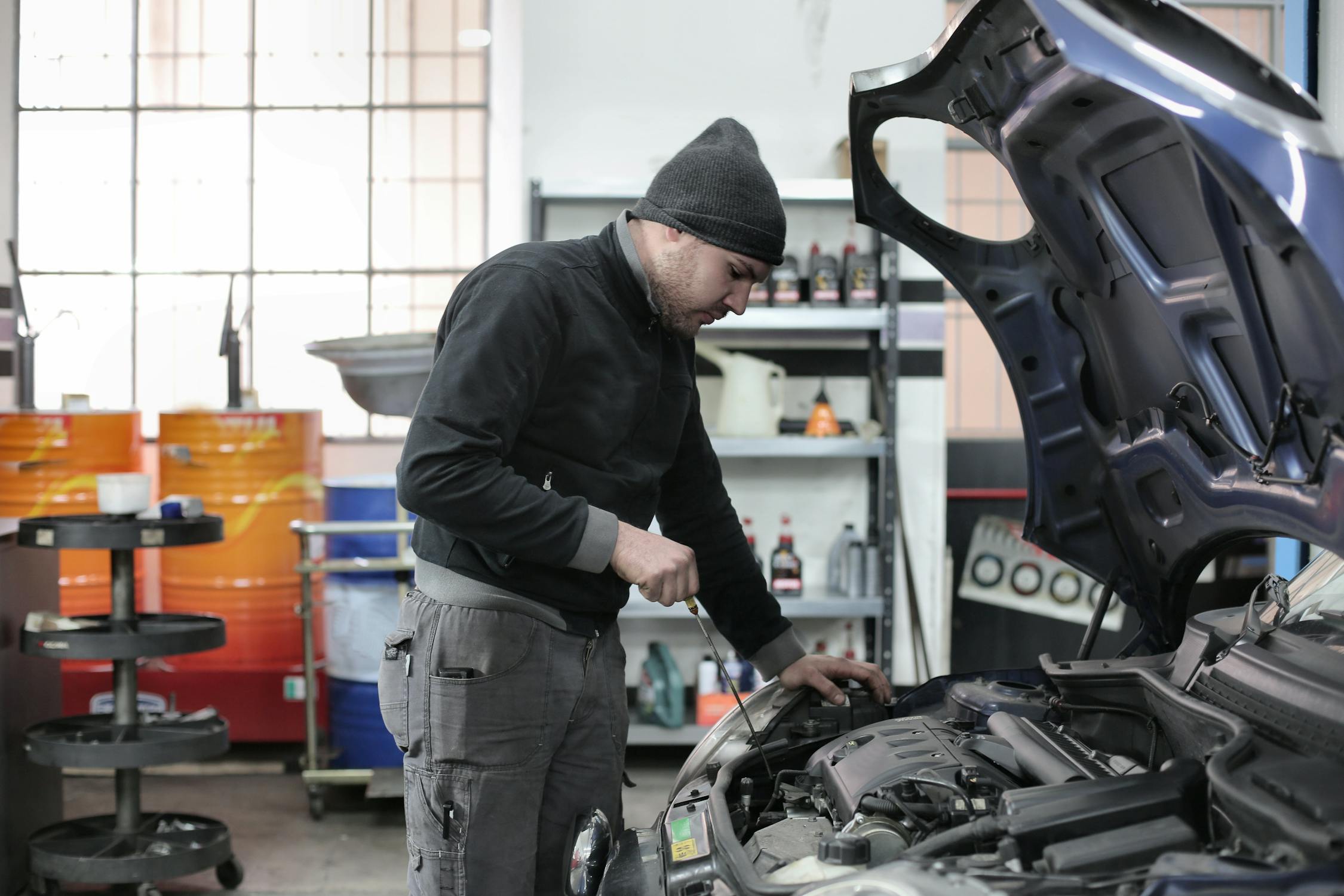
🚫 NEVER 3D Print These Parts
- Brake system components: Calipers, rotors, pads, lines, master cylinders
- Steering components: Tie rods, pitman arms, steering columns, wheel hubs
- Suspension critical parts: Control arms, ball joints, springs, spindles
- Drivetrain components: Axles, CV joints, differential parts
- Structural safety: Roll cages, seat mounting points, frame reinforcement
- Restraint systems: Seat belt mounts, airbag components
- Wheel components: Lug nuts, wheel spacers, hub adapters
- Fuel system: Fuel lines, pump mounts under pressure, tank components
These components require specific material certifications, manufacturing controls, and testing protocols that FDM printing cannot reliably achieve. A failed bracket is an inconvenience; a failed brake caliper is a catastrophe.
Cost Analysis: 3D Printing vs. Traditional Parts
Beyond the creative possibilities, 3D printing offers significant cost advantages—especially for discontinued, low-volume, or custom parts.

A typical comparison for common replacement parts:
- Dashboard vent: OEM $45-120 → 3D Print $1-3 (97% savings)
- Cup holder insert: OEM $25-60 → 3D Print $0.50-2 (95% savings)
- Trim clip (10-pack): OEM $15-40 → 3D Print $2-5 (88% savings)
- Custom phone mount: Aftermarket $25-80 → 3D Print $2-5 (92% savings)
- Shift knob: Aftermarket $30-150 → 3D Print $3-8 (90% savings)
For classic car owners, savings can be even more dramatic when OEM parts sell for hundreds or are simply unavailable at any price.
Real-World Case Studies
Case Study 1: The Full-Scale Miata Hardtop
Perhaps the most ambitious DIY automotive 3D printing project to date, maker 3D printed an entire hardtop for his Mazda Miata. The multi-section project required careful planning for structural integrity, panel fitment, and weather sealing. While not for beginners, it demonstrates the technology's ultimate potential.
Case Study 2: BMW E30 Restoration
Classic BMW restorers have embraced 3D printing for parts that BMW no longer manufactures. Common prints include throttle body adapters, HVAC knobs, gauge cluster bezels, and various trim clips. One community member estimated saving over $2,000 in parts costs using a $300 printer.
Case Study 3: Porsche 944 Cold Air Intake
Performance enthusiasts have designed complete cold air intake systems using ASA and PA-CF materials. The resulting intake improved throttle response while costing a fraction of commercial options—and allowed custom tuning for specific engine builds.
Future of Automotive 3D Printing
The technology continues advancing rapidly:

- Material advancement: New engineering filaments with higher heat resistance and better mechanical properties appear regularly
- Printing speed: High-speed printers (300mm/s+) now achieve in hours what took days five years ago
- OEM adoption: More automakers integrating AM into production, improving legitimacy and standardization
- Community growth: Expanding libraries of tested, vehicle-specific designs
- Service availability: On-demand printing services making high-end technologies accessible without equipment investment
The industry trajectory points toward 3D printing becoming standard practice for both manufacturers and enthusiasts—a shift from "alternative method" to "default consideration" for certain part categories.
Getting Started Today
Ready to begin your automotive 3D printing journey? Here's your action plan:
- Start small: Print a simple bracket or clip before attempting complex projects
- Learn materials: Understand why ASA beats PLA for car parts
- Join communities: Connect with other makers for advice and file sharing
- Document everything: Record settings that work for future reference
- Iterate: Expect your first print to be a learning experience, not a final product
🚗 Ready to Start Printing Car Parts?
Join thousands of automotive enthusiasts sharing designs, troubleshooting prints, and pushing the boundaries of what's possible. Our community has you covered—from first prints to complex restorations.
Frequently Asked Questions
Is it legal to 3D print car parts?
Yes, for personal use. You can print parts for your own vehicle without legal issues. Selling 3D printed parts involves additional considerations around product liability, but personal use is entirely legal. Check our legal guide for details on commercial considerations.
Will 3D printed parts survive extreme temperatures?
With proper material selection, yes. ASA handles temperatures up to 95-100°C, making it suitable for most interior and exterior applications. For engine bay parts experiencing higher temperatures, PA-CF (carbon fiber nylon) maintains integrity up to 180°C.
How strong are 3D printed parts compared to injection molded?
3D printed parts can achieve 70-90% of the strength of injection molded equivalents when properly designed and printed. Key factors include material selection, print orientation (layer lines perpendicular to stress), and adequate wall thickness. For most non-structural applications, this strength is more than sufficient.
What's the best 3D printer for automotive parts?
The Bambu Lab P1S offers the best balance of enclosed chamber (required for ASA/ABS), print quality, speed, and price for most users. Budget option: Creality K1C. Professional option: Qidi X-Max 3 for larger parts.
Can I print parts for cars I plan to sell?
This enters a gray area. While generally acceptable for non-safety parts (interior trim, accessories), full disclosure to the buyer is recommended. Avoid modifying safety-critical systems on vehicles you plan to sell, as liability concerns become significant.
How do I find files for my specific vehicle?
Start with our Parts Library (searchable by make/model), then check Thingiverse and Printables. Vehicle-specific forums often have dedicated 3D printing threads. Can't find what you need? Post a request in our community forum—someone may have designed it.
Conclusion
Automotive 3D printing has evolved from experimental curiosity to practical manufacturing solution. Whether you're replacing a broken vent clip, restoring a classic car, or building custom performance parts, additive manufacturing offers a path that's faster, cheaper, and more accessible than ever before.
The key to success lies in understanding the technology's capabilities and limitations: choosing the right materials for your application, designing with printability in mind, and never compromising on safety-critical components. Start with simple projects, learn from each print, and gradually tackle more ambitious builds.
The automotive 3D printing community continues to grow, sharing designs, troubleshooting problems, and pushing boundaries. Join us—your next project awaits.
Reference shelf
Materials and equipment referenced here
Optional product references matched to the material or printer discussion above. Use the specifications—not the brand name—to decide what fits your setup.
| Referenced item | What to verify | Price & availability |
|---|---|---|
| PETG filamentAmazon · Affiliate link | Amazon product page for 1.75 mm PETG; confirm colour, spool size, print temperature, seller, and delivery region. | Check price at Amazon |
| ASA filamentAmazon · Affiliate link | Amazon product page for 1.75 mm ASA; use an enclosure and suitable ventilation, and confirm seller and regional availability. | Check price at Amazon |
| ABS filamentAmazon · Affiliate link | Amazon product page for 1.75 mm ABS; use an enclosure and suitable ventilation, and verify temperature requirements and seller. | Check price at Amazon |
Affiliate disclosure: if you buy through an eligible link, 3DPrintedCarPart may earn a commission at no extra cost to you. As an Amazon Associate I earn from qualifying purchases. Confirm product specifications, compatibility, seller terms, and vehicle safety before ordering or using anything. Amazon may redirect you to a nearby supported store; otherwise the original Amazon.com page remains available.


