![3D Printed Oil Catch Can Bracket: Complete DIY Guide [2026]](/_next/image?url=https%3A%2F%2Fimages.pexels.com%2Fphotos%2F3807517%2Fpexels-photo-3807517.jpeg%3Fauto%3Dcompress%26cs%3Dtinysrgb%26w%3D1260%26h%3D750%26dpr%3D2&w=3840&q=75)
If you've installed an oil catch can on your project car, you've probably faced the same frustration everyone does: the mounting bracket. Either the included bracket doesn't fit your engine bay, it's made of flimsy metal that vibrates loose, or you're left drilling holes in places you'd rather not. Enter 3D printing—the perfect solution for creating custom oil catch can brackets that fit your exact engine bay layout.
In this guide, we'll cover everything you need to know about designing and printing your own oil catch can mounting bracket. From material selection (spoiler: PLA will fail) to design considerations for engine bay temperatures, you'll have a rock-solid bracket ready for track days or daily driving.
What Is an Oil Catch Can Bracket?
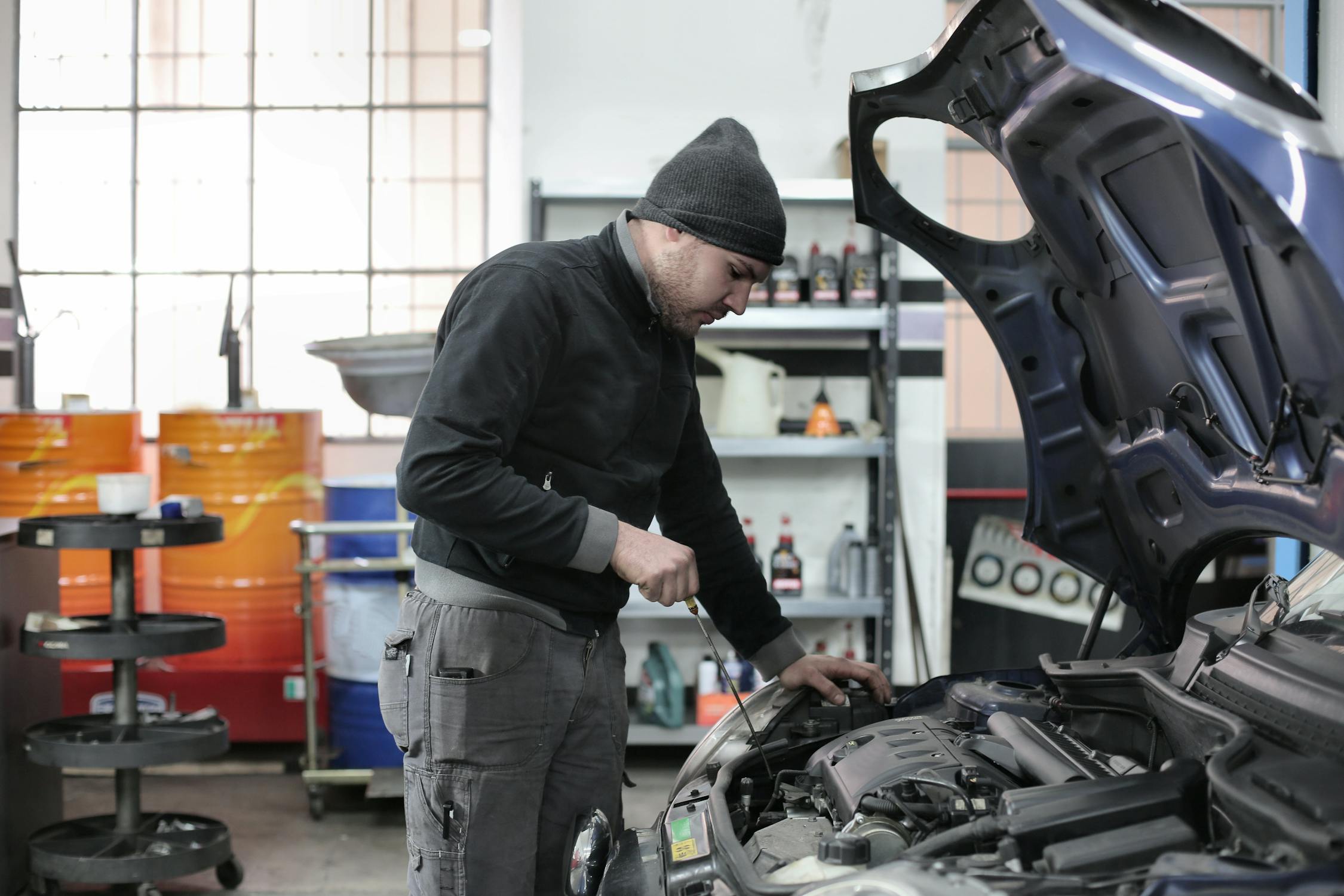
An oil catch can bracket is the mounting hardware that secures your oil catch can to the engine bay. It's the unsung hero of your PCV system upgrade, holding the catch can in place while your engine sends hot, pressurized crankcase gases through it.
Oil catch cans intercept oil vapor and contaminants from the positive crankcase ventilation (PCV) system before they can reenter your engine's intake. This is especially important for direct injection engines, where carbon buildup on intake valves is a serious problem since there's no fuel spray to clean them.
Why the Bracket Matters
- Vibration resistance — Engine bays vibrate constantly; a loose catch can will leak or disconnect
- Heat management — Proper positioning keeps the can away from hot exhaust components
- Accessibility — You need to drain and clean the catch can regularly
- Hose routing — The bracket affects your PCV hose runs and angles
Why 3D Print Your Oil Catch Can Bracket?
Universal catch can brackets are designed to fit "most" vehicles, which means they fit none of them perfectly. Here's why 3D printing makes sense:
| Factor | Universal Metal Bracket | 3D Printed Custom Bracket |
|---|---|---|
| Fitment | Requires modification | Perfect fit to your engine bay |
| Cost | $15-40 | $2-5 in filament |
| Lead Time | 3-7 days shipping | 4-8 hours print time |
| Modifications | Requires drilling | Design includes mounting points |
| Customization | Limited | Unlimited (hose routing, can diameter, mounting style) |
The real advantage is design flexibility. You can create brackets that:
- Mount to existing bolt holes (no drilling required)
- Include integrated hose clips for clean routing
- Position the catch can for optimal drainage
- Allow easy access for maintenance
- Match any can diameter (universal or specific brand)
Material Selection: Why PLA Will Fail (And What to Use Instead)

This is where most DIY catch can bracket projects fail. Engine bays experience temperatures ranging from 60°C (140°F) to well over 100°C (212°F) near hot components. PLA's glass transition temperature of 55-60°C means it will soften, warp, and fail in a matter of days—or even hours on a hot summer day.
⚠️ Critical Warning: Never Use PLA in Engine Bays
PLA has a glass transition temperature of 55-60°C. Engine bays routinely exceed this, even in the cooler areas. A warped bracket can cause your catch can to disconnect, spilling oil onto hot components or into your intake system. This is a fire hazard.
Material Comparison for Engine Bay Brackets
| Material | HDT (°C) | Oil Resistance | Rating |
|---|---|---|---|
| PLA | 55-60°C | Poor | ❌ Never use |
| PETG | 65-80°C | Good | ⚠️ Marginal (cool locations only) |
| ABS | 88-105°C | Excellent | ✅ Good |
| ASA | 95-105°C | Excellent | ✅ Recommended |
| PA-CF (Carbon Fiber Nylon) | 150-180°C | Excellent | ✅ Best (high-temp locations) |
| Polycarbonate (PC) | 130-145°C | Good | ✅ Excellent |
Our recommendation: ASA filament is the sweet spot for most oil catch can bracket applications. It offers excellent heat resistance, UV stability (if any part is exposed), and chemical resistance to oil and fuel. For brackets mounted very close to exhaust manifolds or turbo housings, step up to PA-CF (carbon fiber nylon).
Design Considerations for Catch Can Brackets

Whether you're designing from scratch or modifying an existing STL file, keep these factors in mind:
1. Catch Can Diameter
Common oil catch can diameters vary by brand:
| Brand | Diameter | Notes |
|---|---|---|
| Mishimoto | 55-60mm | Popular aftermarket brand |
| Generic Amazon/AliExpress | 62-68mm | Most common for budget cans |
| Ruien | 68mm | Amazon favorite |
| Radium Engineering | Various | High-end, check specs |
💡 Pro Tip: Measure Your Can
Always measure your specific catch can before designing. Add 0.5-1mm clearance for easy installation and removal. Consider whether you want a friction fit, clamp design, or zip-tie-through mounting.
2. Mounting Strategy
Choose your mounting approach based on your engine bay:
- Existing bolt holes: The cleanest option—design the bracket to use factory bolt holes (fender bolts, strut tower bolts, firewall bolts)
- Flat surface mount: Use 3M VHB tape or self-tapping screws to a flat, clean surface
- Frame rail clamp: Design a two-piece clamp that wraps around a frame rail
- Zip-tie through: Include slots or holes for zip-tie mounting to existing brackets or hoses

3. Wall Thickness and Infill
For a load-bearing bracket in a vibrating environment:
- Wall thickness: Minimum 2.4mm (6 walls at 0.4mm line width)
- Infill: 40-60% for rigidity (grid or gyroid pattern)
- Top/bottom layers: At least 5 layers each
- Layer adhesion: Critical—ensure no delamination
4. Integrated Features
The beauty of 3D printing is adding features metal brackets can't have:
- Hose routing clips: Add 3/8" or 1/2" hose clips to the bracket design
- Drain clearance: Ensure the catch can's drain valve is accessible
- Angle adjustment: Some designs incorporate multiple mounting hole positions
- Vibration dampening: Add rubber grommet slots or TPU inserts
Where to Find Oil Catch Can Bracket STL Files
Before designing from scratch, check if someone's already created a bracket for your application:
| Source | Type | Notes |
|---|---|---|
| Printables | Free | Best quality files, good documentation |
| Thingiverse | Free | Large library, variable quality |
| Cults3D | Free/Paid | Vehicle-specific designs available |
| STLFinder | Aggregator | Searches multiple sources |
| Vehicle forums | Free | Check your car's enthusiast forum |
Popular vehicle-specific designs that already exist:
- Prius: 68mm Ruien bracket (Thingiverse)
- Dodge Challenger: Inner fender mounting bracket (ChallengerTalk forum)
- Subaru WRX/STI: Multiple designs on r/WRX and Printables
- Motorcycles: Frame-mounted designs on Printables
Print Settings for Engine Bay Brackets

These settings assume you're using ASA or ABS. Adjust as needed for other materials:
| Parameter | ASA | PA-CF |
|---|---|---|
| Nozzle Temp | 240-260°C | 260-280°C |
| Bed Temp | 90-110°C | 80-100°C |
| Enclosure | Required (40-50°C) | Recommended |
| Layer Height | 0.2mm | 0.2mm |
| Infill | 50% (gyroid) | 40% (gyroid) |
| Wall Count | 6 | 5 |
| Cooling | Low (20-40%) | None |
| Print Speed | 40-60mm/s | 30-50mm/s |
⚡ Print Orientation Matters
Orient your bracket so that layer lines don't run perpendicular to the load direction. The weakest point in FDM prints is layer adhesion. If your bracket will be pulled downward by the catch can's weight, orient the print so layers stack horizontally, not vertically.
Step-by-Step Installation Guide

Once your bracket is printed and inspected, follow these steps for installation:
- Test fit without the catch can: Make sure the bracket fits your mounting location and all holes align with existing hardware.
- Check clearances: With the hood closed, ensure nothing interferes with the bracket or catch can. Check clearance from moving components (belts, pulleys), hot components (exhaust, turbo), and electrical connections.
- Install mounting hardware: Use stainless steel bolts, lock washers, and appropriate fasteners. Don't overtorque—you can crack the bracket.
- Seat the catch can: Install the catch can into the bracket. Add rubber padding if needed to prevent rattling.
- Route PCV hoses: Connect your PCV inlet and outlet hoses. Use the integrated hose clips if your design has them.
- Final inspection: Double-check all connections, start the engine, and verify nothing vibrates loose or interferes with operation.
Real-World Examples: Community Builds
Toyota Prius Oil Catch Can Bracket
One of the most popular 3D printed catch can brackets is for the Toyota Prius. The Ruien catch can (68mm diameter) from Amazon is a budget favorite, and Thingiverse user Danlatu created a bracket that includes an integrated 3/8" hose clip.
Key lesson from this build: The designer's first PLA+ print warped in summer heat. The nylon replacement has survived multiple seasons without issue. This perfectly illustrates why material selection is critical.
Dodge Challenger Build
A member of the Challenger Talk forum shared a 3D printable mount that uses the inner wheel arch as a mounting point. Printed in ABS, the bracket positions the catch can for easy access while keeping it protected from road debris. The design works for both the 3.6L V6 and Hemi engines.
Subaru WRX Community
The Subaru community has embraced 3D printed catch can brackets. One popular design mounts in the passenger-side corner of the engine bay, using existing factory bolt holes. The designer printed in PLA initially but noted the temperature near PCV lines can still reach 90°C+ during spirited driving—requiring an upgrade to ASA.
Cost Comparison
Let's break down the real costs:
| Option | Cost | Fit Quality | Customization |
|---|---|---|---|
| Universal metal bracket | $15-40 | Poor to fair | None |
| Brand-specific bracket | $25-60 | Good | None |
| 3D Printed (ASA) | $2-5 | Perfect | Unlimited |
| 3D Printed (PA-CF) | $5-12 | Perfect | Unlimited |
Even at the high end with PA-CF filament, a 3D printed bracket costs 80-90% less than a universal metal bracket—and fits perfectly.
Troubleshooting Common Issues
| Problem | Cause | Solution |
|---|---|---|
| Bracket warped after install | Wrong material (PLA/PETG) | Reprint in ASA, ABS, or PA-CF |
| Bracket cracked during install | Poor layer adhesion or wrong orientation | Increase nozzle temp, reorient print |
| Catch can vibrates loose | Too much clearance | Add rubber padding or redesign tighter |
| Can't access drain valve | Poor positioning in design | Redesign with drain clearance in mind |
| Print warping during printing | Insufficient enclosure temp | Increase enclosure temp, add brim |
Printer Requirements
To print a reliable oil catch can bracket, you'll need:
| Feature | Minimum | Recommended |
|---|---|---|
| Enclosure | Yes (ASA/ABS) | Actively heated (PA-CF) |
| Bed Temp | 100°C | 110°C+ |
| Nozzle | Steel (for PA-CF) | Hardened steel |
| Build Volume | 150x150mm | 200x200mm+ |
Good printers for this project include the Bambu Lab P1S, Creality K1C, or any enclosed CoreXY machine. Check out our complete printer buying guide for more recommendations.
Frequently Asked Questions
Can I use PETG for an oil catch can bracket?
PETG is marginal at best. With a heat deflection temperature of 65-80°C, it may work in cooler engine bay locations (near the fender, away from heat sources). However, for any bracket near the engine block, exhaust, or turbo, stick with ASA, ABS, or PA-CF. If your bracket ever starts to soften, you risk the catch can disconnecting.
How long will a 3D printed catch can bracket last?
When printed in the correct material (ASA or PA-CF) with proper settings, these brackets last for years. Users report 2+ years of daily driving and track use without degradation. The key is material selection and ensuring the print has good layer adhesion.
What size catch can bracket do I need?
Measure the outer diameter of your specific catch can. Add 0.5-1mm for clearance. Common sizes are 55-68mm depending on the brand. If designing from scratch, check the manufacturer's specs or measure with calipers.
Do I need to post-process the bracket?
Not necessarily. ASA and ABS can be vapor-smoothed with acetone for a cleaner finish, but it's purely cosmetic for this application. Make sure to remove any support material cleanly and test-fit before installation.
Can I print a complete oil catch can, not just the bracket?
Technically possible with the right materials and design, but not recommended. Commercial catch cans use baffles and filters to separate oil from air—features that are difficult to replicate effectively with FDM printing. Stick to printing the bracket and buy a quality catch can.
What's the best infill pattern for brackets?
Gyroid infill at 40-50% provides excellent strength-to-weight ratio and handles stress from multiple directions well. Grid pattern also works but may be weaker in certain orientations. Avoid honeycomb for load-bearing brackets.
Join the Community
Share Your Oil Catch Can Bracket Build
Created a custom catch can bracket for your vehicle? Share it with the community! Upload your STL files, print settings, and installation photos to help fellow makers.
Browse Parts Library Join the ForumConclusion
3D printing an oil catch can bracket is a practical, cost-effective solution that delivers better fitment than universal metal brackets. The key is using the right material—ASA for most applications, PA-CF for high-heat environments—and designing with your specific engine bay layout in mind.
Whether you download an existing design from Printables or create your own in Fusion 360, you'll end up with a bracket that fits perfectly, includes integrated features like hose clips, and costs a fraction of aftermarket alternatives.
Ready to start? Check out the parts library for existing catch can bracket designs, or head to the forum to ask questions about your specific vehicle. And remember: when in doubt about material selection, always choose the higher-temperature option. A $3 bracket reprinted in ASA beats a failed PLA bracket any day.
Ready to Design Your Bracket?
Get started with our CAD design guide or browse community files for your vehicle.
Learn CAD Design →Reference shelf
Materials and equipment referenced here
Optional product references matched to the material or printer discussion above. Use the specifications—not the brand name—to decide what fits your setup.
| Referenced item | What to verify | Price & availability |
|---|---|---|
| PETG filamentAmazon · Affiliate link | Amazon product page for 1.75 mm PETG; confirm colour, spool size, print temperature, seller, and delivery region. | Check price at Amazon |
| ASA filamentAmazon · Affiliate link | Amazon product page for 1.75 mm ASA; use an enclosure and suitable ventilation, and confirm seller and regional availability. | Check price at Amazon |
| ABS filamentAmazon · Affiliate link | Amazon product page for 1.75 mm ABS; use an enclosure and suitable ventilation, and verify temperature requirements and seller. | Check price at Amazon |
Affiliate disclosure: if you buy through an eligible link, 3DPrintedCarPart may earn a commission at no extra cost to you. As an Amazon Associate I earn from qualifying purchases. Confirm product specifications, compatibility, seller terms, and vehicle safety before ordering or using anything. Amazon may redirect you to a nearby supported store; otherwise the original Amazon.com page remains available.