
Files (5)
Reference shelf
Recommended filament for this print
Product references matched to the published material guidance. Confirm diameter, heat resistance, colour, and printer compatibility.
| Referenced item | What to verify | Price & availability |
|---|---|---|
| PETG filamentAmazon · Affiliate link | Amazon product page for 1.75 mm PETG; confirm colour, spool size, print temperature, seller, and delivery region. | Check price at Amazon |
| ASA filamentAmazon · Affiliate link | Amazon product page for 1.75 mm ASA; use an enclosure and suitable ventilation, and confirm seller and regional availability. | Check price at Amazon |
Affiliate disclosure: if you buy through an eligible link, 3DPrintedCarPart may earn a commission at no extra cost to you. As an Amazon Associate I earn from qualifying purchases. Confirm product specifications, compatibility, seller terms, and vehicle safety before ordering or using anything. Amazon may redirect you to a nearby supported store; otherwise the original Amazon.com page remains available.
3000GT / Stealth Boost Leak Check Tool
License & use
The file license permits commercial reuse, subject to any applicable attribution or share-alike terms. License status does not verify vehicle fitment, OEM rights, design patents, or safety.

Shared by
3DPrintedCarPartDescription
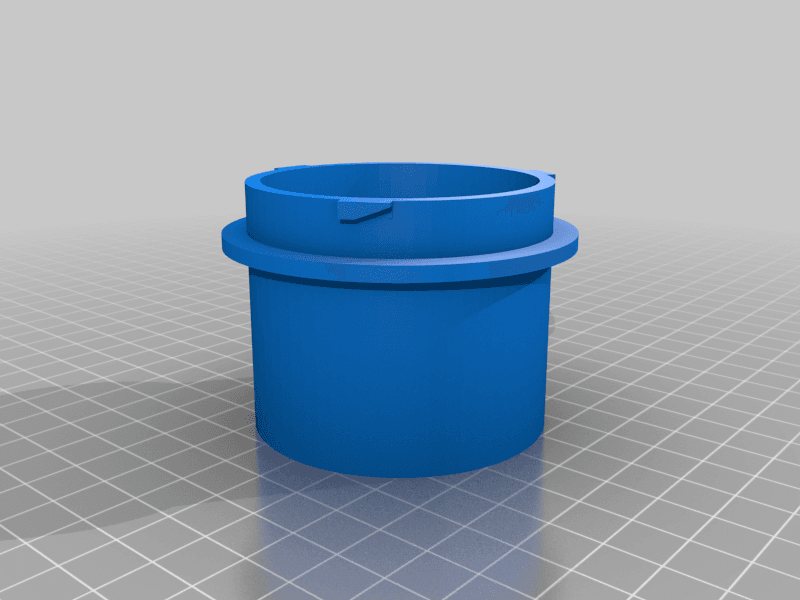
Boost leak testing tool for Mitsubishi 3000GT VR-4 or Dodge Stealth TT. The assembled part is installed directly to the intake bubble to allow for the system to be pressurized and leak checked. The base has provisions for two ports. On my setup I have one for an air hose quick-connect fitting, and one for a pressure gauge. The plug IDs are sized to 0.524 inch for the gauge, and 0.350 inch for the quick-connect fitting. I believe I printed these pieces with 4 perimeter layers, which let the metal threads on the gauge and fitting bite nicely into the plastic. I also have included here a blank port if you choose not to use a direct reading pressure gauge. Once you've printed the pieces, the plugs are inserted from the inside and glued into place (do this before tapping your gauge or fitting). The plugs have a tapered boss, so even if your glue joint fails the internal pressure will not be able to eject them. I've tested my configuration up to 40 psi without leaks. The weakest link in the connection will likely be between the tool itself and the intake bubble on the car. I always bunch up a large towel at the outlet when pressurizing in case the assembly blows to cushion any impact with the engine bay sidewall - I've never had it pop on me yet, but a good precaution nonetheless. I also have a file for a y-pipe blank-off cap. This can be used in conjunction if you want to segregate the components upstream of the engine intake plenum. You'll need other smaller caps and plugs to do a complete leak check, but those can be found in various tapered sizes at any auto parts store, or in a Mighty-vac kit. The rest of the test set consists of a bunch of Harbor Freight pneumatic components like a 2 ft whip line, shutoff valve, regulator, and other quick-connect fittings. There's a lot of variability on how you can assemble this part. I like the remote regulating and shutoff valve setup I have shown in the photo since it lets you keep your hand away from the intake bubble when it's at high pressure.
Compatible Vehicles
Originally published on thingiverse.com by Andy Hein (nils302) · License: CC BY 4.0
Browse categories
Browse other part families
Jump to interior, exterior, accessories, dashboard, mechanical, or tools hubs when you need a different kind of replacement part.
Share whether this print actually fits a real car. Installed photos and material notes make the catalog more trustworthy.
Related Parts
Most specific car + model + year + category matches first, with popular parts mixed in.